Medically reviewed by the Know Your Surgery Editorial Team. Last reviewed: May 2026.
A hair transplant is a surgical procedure that moves hair from a part of the scalp where hair still grows (the donor area) to a thinning or bald area (the recipient area). The transferred hair follicles continue to grow in their new location, producing natural hair that can be trimmed, washed, and styled normally.
This guide gives you a calm, plain-English overview of what hair transplant surgery is, the main techniques used in the United States today, who tends to be a good candidate, and what the patient journey looks like at a high level. Detailed information on causes of hair loss and candidate evaluation, the procedure-room steps, and patient questions live in the other articles in this cluster.
Significance and Prevalence of Hair Loss in the United States
Hair loss is extremely common in the United States. According to the American Academy of Dermatology (AAD) and American Society of Plastic Surgeons (ASPS), roughly 50 million American men and 30 million American women experience hereditary hair loss (androgenetic alopecia) at some point in their lives. By age 50, the majority of men show some degree of male-pattern hair loss, and many women experience female-pattern hair thinning.
Hair loss is rarely a medical emergency, but it can have a real impact on confidence, social engagement, and quality of life. The International Society of Hair Restoration Surgery (ISHRS) reports that hair transplant has become one of the most popular cosmetic procedures in the US over the past decade, especially as minimally invasive techniques have improved natural-looking results.
Modern hair transplant surgery uses precision instruments, microscopes, and (at some centers) robotic assistance to harvest individual follicular units and place them in carefully designed patterns. Outcomes are durable when done in suitable candidates by trained surgeons.
What Is a Hair Transplant?
A hair transplant moves hair follicles from a donor area (typically the back and sides of the scalp, where hair is genetically resistant to balding) to thinning or bald areas. The transferred follicles continue their normal growth cycle in the new location.
The procedure is performed by a dermatologist or plastic surgeon trained in hair restoration, usually under local anesthesia in an outpatient setting. The two main techniques in the US today are FUE (follicular unit extraction) and FUT (follicular unit transplantation, also called the “strip” technique). The full step-by-step procedure walkthrough lives in our procedure and recovery article.
How the Hair Follicle Works

Hair grows from small structures in the skin called follicles. Each follicle goes through a growth cycle: a long growth phase, a brief transition phase, and a resting phase before shedding and starting again. Most healthy adults have around 100,000 hairs on the scalp at any given time.
Hair loss in androgenetic alopecia is driven by the hormone DHT, which gradually shrinks susceptible follicles. Over time, the affected follicles produce thinner, shorter hair until they stop producing visible hair altogether. Importantly, the follicles at the back and sides of the scalp are usually genetically resistant to DHT, which is why those areas can serve as donor sites for hair transplant.
When a follicle is moved during a transplant, it carries its genetic resistance with it. The transplanted hair continues to grow in the new location, even though surrounding non-transplanted hair may continue to thin.
Main Hair Transplant Techniques

US surgeons today use two established techniques. Each has trade-offs in terms of recovery, scarring, and which patients are best suited.
Follicular Unit Extraction (FUE). Tiny round punches (typically less than 1 mm) extract individual follicular units one at a time from the donor area. The donor area heals as small dot-like marks rather than a single line. FUE is currently the most popular technique in the US and is often preferred by patients who plan to wear short hair in the donor area.
Follicular Unit Transplantation (FUT). A thin strip of skin with hair is removed from the back of the scalp. The strip is divided into individual follicular units under microscopes, and the donor area is closed with a fine line of sutures. FUT typically yields a higher number of grafts in a single session and may be preferred for patients needing larger transplants or who keep their donor hair longer.
Once the grafts are harvested, the surgeon uses small instruments to make tiny recipient sites in the thinning area and place each graft in a carefully designed pattern.
A single sentence on emerging methods: some practices offer robotic FUE (such as ARTAS) to assist with extraction, although the surgeon still oversees and performs the artistic placement. We compare techniques in more depth in our procedure and recovery article.
Surgical Techniques at a High Level
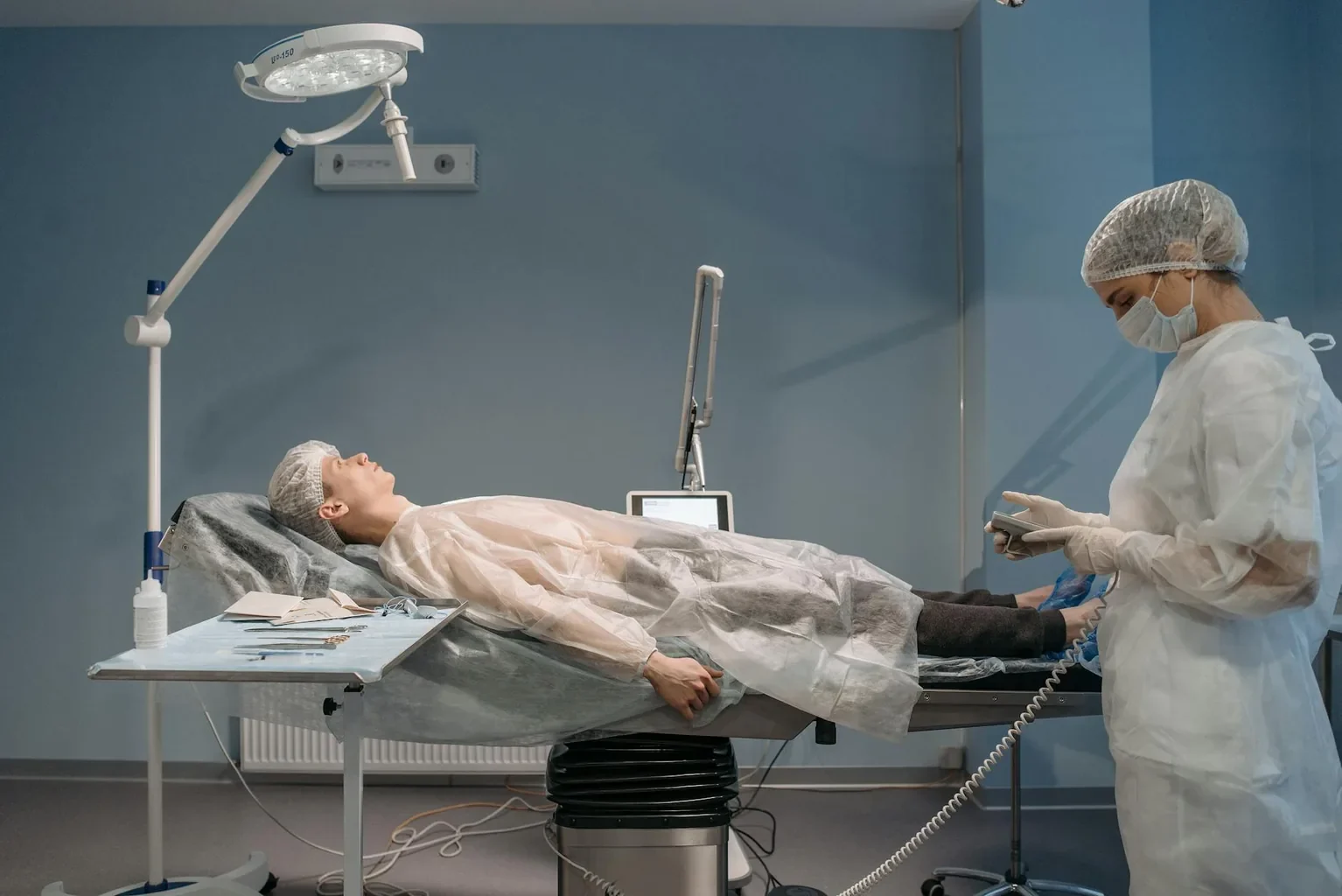
Most hair transplant procedures are performed under local anesthesia. The patient is awake and comfortable throughout, often able to read, watch a movie, or talk during the procedure. Operating times typically range from 4 to 10 hours depending on the number of grafts.
Patients are at the surgery center longer for assessment, design, anesthesia, and recovery. The surgical team monitors comfort and safety throughout, and most patients walk out of the office at the end of the day to recover at home.
Most hair transplants are outpatient procedures, with no overnight hospital stay. Some larger sessions may be split across two days.
What Gets Moved in a Hair Transplant?
Only individual follicular units are moved. Each follicular unit naturally contains 1 to 4 hairs. The surgeon harvests follicular units from the donor area and places them in the recipient area according to a pre-planned pattern that respects natural hair angles and density.
In most cases, the patient’s existing native hair is preserved. The transplant adds to it rather than replacing it. There are no implants, foreign materials, or grafts beyond the patient’s own follicles.
Who Might Need a Hair Transplant?
Hair transplant is typically considered when:
- Hair loss is bothersome and affects quality of life
- The patient has stable, predictable hair loss (not actively progressing rapidly)
- There is sufficient donor hair on the back and sides of the scalp
- Medical therapy alone (such as finasteride, minoxidil, or low-level laser therapy) is not enough
- The patient has realistic expectations about outcomes
Common reasons in the United States include:
- Male-pattern hair loss (the most common indication)
- Female-pattern hair thinning in selected candidates
- Hairline restoration after prior over-aggressive transplants
- Eyebrow and beard transplant in select candidates
- Scar coverage (after injury, burn, or other surgery)
- Reconstructive cases after burns or trauma
Some patients are not good candidates: very young patients with rapidly progressing loss, patients with insufficient donor density, patients with active alopecia areata, or patients with unrealistic expectations. We cover candidate evaluation in detail in our causes and diagnosis article.
Early Signs of Hair Loss
Hair loss often develops slowly. Common patterns that warrant evaluation include:
- Receding hairline at the temples
- Thinning at the crown
- Widening of the part in women
- Increased shedding (more hair on pillow, brush, or shower drain)
- Gradual decrease in overall density
- Visible scalp through the hair
Sudden, patchy, or rapidly progressing hair loss has different causes (alopecia areata, telogen effluvium, scarring alopecias) and requires medical evaluation rather than immediate transplant. Anyone with sudden hair loss along with skin changes, scarring, or other unusual symptoms should see a dermatologist.
Your Hair Transplant Journey at a Glance
Although every patient’s path is different, the typical hair transplant journey in the United States follows a familiar pattern.
It often begins with a consultation with a dermatologist or plastic surgeon trained in hair restoration. The clinician examines the scalp, reviews medical and family history, and discusses goals. For some patients, medical therapy is recommended first, alone or in combination with eventual surgery. For appropriate candidates, the team plans the transplant: number of grafts, technique (FUE or FUT), hairline design, and timeline.
Pre-operative preparation is brief but careful. On surgery day, the procedure runs 4 to 10 hours, mostly under local anesthesia. Most patients walk out at the end of the day with bandages or padded headwear.
Recovery at home includes gentle cleaning, sleeping with the head elevated for a few nights, and avoiding strenuous activity for a couple of weeks. Transplanted hairs typically shed within a few weeks of the procedure (which is normal), and new growth begins around 3 to 4 months. Most of the final result is visible by 12 months, with continued maturation through 18 months.
For patients with progressive native hair loss, ongoing medical therapy may be recommended to preserve non-transplanted hair. Detailed timelines are covered in our procedure and recovery article.
Frequently Asked Questions
Is a hair transplant major surgery?
A hair transplant is a surgical procedure, but it is performed under local anesthesia in an outpatient setting. Recovery is typically faster than for major operations, and most patients return to normal activities within a couple of weeks.
Will the transplanted hair last?
Hair moved from genetically resistant donor sites is expected to keep growing in the new location. Most patients have durable results lasting many years. Native (non-transplanted) hair may continue to thin, which is why many patients combine surgery with medical therapy.
Will it look natural?
Modern hair transplants performed by experienced surgeons can produce very natural-looking results, with carefully designed hairlines and angled placement. Outcomes vary by surgeon skill, donor characteristics, and patient expectations.
Continue Reading the Hair Transplant Cluster
- Hair Transplant: Causes, Diagnosis, and When to Consider Surgery
- Hair Transplant: Procedure, Recovery, and Rehabilitation
- Hair Transplant: FAQs, Statistics, and Patient Stories
Sources
- American Academy of Dermatology (AAD). Hair loss: types and treatment. https://www.aad.org/public/diseases/hair-loss
- American Society of Plastic Surgeons (ASPS). Hair transplantation. https://www.plasticsurgery.org/cosmetic-procedures/hair-transplant
- International Society of Hair Restoration Surgery (ISHRS). Patient resources. https://ishrs.org/patient-information/
- National Institutes of Health (NIH) MedlinePlus. Hair loss. https://medlineplus.gov/hairloss.html
- Mayo Clinic. Hair transplant: what to expect. https://www.mayoclinic.org/diseases-conditions/hair-loss/diagnosis-treatment/drc-20372932
- Cleveland Clinic. Hair transplant: overview. https://my.clevelandclinic.org/health/treatments/hair-transplant
Medical Disclaimer
The information in this article is for general education and is not a substitute for professional medical advice, diagnosis, or treatment. Always consult a qualified healthcare provider with questions about hair loss or hair restoration. Never disregard professional medical advice or delay in seeking it because of something you have read here.