Medically reviewed by the Know Your Surgery Editorial Team. Last reviewed: May 2026.
Patients and families often have practical questions about kidney stone removal that go beyond what an emergency department or urology visit can cover: cost, complications, time off work, stent symptoms, and how to prevent future stones. This article answers the most common questions, shares US-specific outcome data, and includes a few illustrative patient scenarios.
For the procedure walkthrough and recovery timeline, see our procedure and recovery article. For the diagnostic process, see our causes, diagnosis, and decision article.
Frequently Asked Questions
How much does kidney stone removal cost in the United States?
Cost varies based on the procedure (URS, SWL, or PCNL), hospital, geographic area, anesthesia type, and whether a stent is placed. Kidney stone procedures are considered medically necessary in essentially all cases of clinically significant stone disease and are generally covered by health insurance. Patients are typically responsible for deductibles, copays, and any out-of-network charges. A call to the hospital billing office and your insurance company before the procedure can clarify your specific out-of-pocket cost.
Is kidney stone removal covered by insurance?
In essentially all cases, yes. Stone disease causing severe pain, infection, or blockage is a recognized medical condition, and major US insurers (including Medicaid, Medicare, and private plans) cover the procedures. Pre-authorization is sometimes required for elective scheduling, especially for SWL and PCNL.
What is the success rate?
Success rates vary by procedure and stone size:
- Ureteroscopy (URS): typically 90 percent or higher stone-free rate for most stones
- Shock wave lithotripsy (SWL): 50 to 80 percent stone-free rate, depending on stone size, location, and composition
- PCNL: 80 to 95 percent stone-free rate for large stones in a single procedure; sometimes a second procedure is needed
The American Urological Association (AUA) guidelines describe these procedures as well-established and effective, with the right approach matched to the right stone.
What are the most common complications?
Complications of kidney stone removal in the US are uncommon but possible. They include:
- Infection (urinary tract infection or, rarely, bloodstream infection)
- Bleeding, more common with PCNL
- Ureteral injury during URS (rare; usually managed with a stent)
- Stent symptoms (urgency, frequency, mild pain)
- Incomplete stone clearance, requiring another procedure
- Stone fragments getting stuck in the ureter (called “steinstrasse”), occasionally requiring URS to clear
- Reactions to anesthesia
Most complications are minor and resolve quickly. Severe complications are rare in modern, US-based urology practice.
Can kidney stones be treated without surgery?
Yes, in many cases. Small stones (typically under 5 to 6 mm) often pass on their own with hydration, pain medication, and time. Some patients are also given a medication called tamsulosin to help relax the ureter. Larger stones, blocking stones, or stones with infection usually need a procedure. The decision is shared with the urologist based on the specific situation.
How serious is a blocked, infected stone?
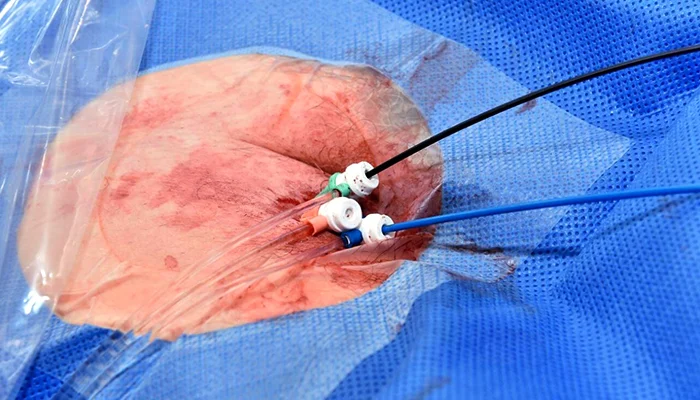
A blocked stone with infection (called obstructive pyelonephritis) is a urologic emergency. Pus and infected urine cannot drain past the stone, and infection can spread quickly. Treatment includes urgent drainage (typically a ureteral stent or a percutaneous nephrostomy tube placed in the back), IV antibiotics, and stone removal scheduled later. With prompt treatment, outcomes are usually good, but the situation is genuinely time-sensitive.
How long is the hospital stay?
- URS: outpatient (same-day discharge for most patients)
- SWL: outpatient (same-day discharge)
- PCNL: typically 1 to 2 nights, sometimes longer for complications
How long until I can go back to work?
It depends on the procedure and your job:
- URS or SWL, desk work: typically 2 to 5 days
- PCNL, desk work: typically 1 to 2 weeks
- Physically demanding work (lifting, manual labor): typically 2 to 4 weeks for URS/SWL, 4 to 6 weeks for PCNL
Your urologist makes the final call based on your specific recovery.
Why does my stent feel uncomfortable?
Ureteral stents commonly cause:
- A sense of urgency or frequency
- Mild burning during urination
- Mild flank discomfort that may worsen with activity
- A feeling of needing to urinate even when the bladder is empty
These symptoms are normal and resolve once the stent is removed. Medications such as oxybutynin or tamsulosin can help. Severe pain, fever, or heavy bleeding warrants a call to the urologist.
When can I drive after the procedure?
Most patients can drive once they are off prescription pain medication and feel they can react quickly in an emergency. This is typically 1 to 3 days for URS or SWL, and 1 to 2 weeks for PCNL. Always confirm with your urologist.
Can I exercise during recovery?
Light walking is encouraged from day one. Strenuous exercise, heavy lifting, and contact sports are typically restricted for one to four weeks depending on the procedure. The urologist will clear you for full activity at the follow-up visit.
Will I have a scar?
URS and SWL leave no scars. PCNL leaves a small scar (less than half an inch) on the back, which fades over months.
How do I prevent another kidney stone?
Prevention depends on the stone type. General steps that help most patients:
- Drink plenty of water (aim for 2 to 3 liters of urine per day)
- Reduce sodium intake
- Eat a balanced calcium intake with meals (do not avoid calcium-rich foods)
- Limit oxalate-rich foods if you form calcium oxalate stones (spinach, nuts, certain teas)
- Limit animal protein if recommended
- Avoid sugary drinks, especially those with high-fructose corn syrup
- Maintain a healthy weight
- Take any preventive medications prescribed by the urologist
A 24-hour urine collection and stone analysis help tailor the prevention plan.
US Statistics on Kidney Stones

- The NIDDK and CDC describe kidney stones as one of the most common urologic conditions in the United States, with about 1 in 11 Americans affected during their lifetime.
- Prevalence has been rising for several decades, possibly linked to diet, obesity, and climate factors.
- The “stone belt” in the southeastern US has higher rates than the national average.
- Recurrence rates can approach 50 percent over 10 years without preventive care.
- Ureteroscopy is the most common procedural approach in US urology today, having surpassed SWL in many regions.
- Mortality from kidney stone procedures is very low in the modern era.
When to Seek Emergency Medical Help
After kidney stone removal, certain symptoms warrant immediate contact with the urologist or an emergency department. Call your urologist’s office without delay or go to the nearest emergency room if you experience:
- Severe or worsening flank or abdominal pain
- Fever above 101 degrees Fahrenheit, or shaking chills
- Heavy bleeding in the urine (bright red urine, large clots)
- Inability to urinate
- Severe vomiting that prevents fluid intake
- Severe pain near a PCNL incision, or pus or worsening redness
- Lightheadedness, fainting, or rapid heart rate
- Signs of a blood clot (calf pain, leg swelling)
- Sudden shortness of breath or chest pain
These symptoms can signal complications such as infection, blocked drainage, or other emergencies that need urgent attention.
Patient Stories

These short, illustrative scenarios reflect common kidney stone experiences in the United States. They are educational examples and not real patients.
Marcus, age 34, single small stone, URS. Marcus was woken at 3 a.m. by sudden severe pain in his right flank. He went to the emergency department, where a CT scan showed a 7 mm stone stuck in his right ureter. He was sent home with pain medication and tamsulosin to try to pass the stone, but after a week the stone had not moved. The urologist recommended ureteroscopy with laser. The procedure took 45 minutes. A stent was placed and removed two weeks later. Marcus returned to office work in three days and was back to running within two weeks.
Diane, age 47, multiple kidney stones, SWL. Diane had a history of small stones and now had two kidney stones (5 mm and 6 mm) on a routine follow-up scan. The urologist offered SWL, which she chose to avoid a stent. The procedure took 50 minutes. She had bruising on her back and intermittent pain over the next two weeks as fragments passed. She returned to work in three days and was symptom-free by week three. A 24-hour urine collection guided dietary changes to reduce future stones.
Robert, age 62, large staghorn stone, PCNL. Robert was found to have a large branched stone in his left kidney during workup for a urinary infection. The urologist recommended PCNL. The procedure took two hours. He was admitted for two nights and discharged with a stent. He returned to office work in two weeks and had the stent removed at three weeks. A small fragment was treated with SWL six weeks later. He has been stone-free for two years on hydration and dietary changes.
Questions to Ask Your Urologist
- Which procedure (URS, SWL, or PCNL) do you recommend for me, and why?
- What is the expected stone-free rate for my situation?
- Will I need a ureteral stent? For how long?
- What is your team’s complication rate for this procedure?
- How long will my hospital stay likely be?
- What is my expected recovery timeline?
- What pain management plan do you recommend at home?
- What signs of complications should I watch for, and when should I call you or go to the ED?
- When can I return to work, exercise, and travel?
- Will my stones be sent for analysis, and will you order a 24-hour urine collection?
- What are my best preventive steps once I am healed?
Continue Reading the Kidney Stone Removal Cluster
- Kidney Stone Removal: Overview, Types, and What to Expect
- Kidney Stone Removal: Causes, Diagnosis, and When to Consider Surgery
- Kidney Stone Removal: Procedure, Recovery, and Rehabilitation
Sources
- American Urological Association (AUA). Surgical management of stones guideline. https://www.auanet.org/guidelines-and-quality/guidelines
- National Institute of Diabetes and Digestive and Kidney Diseases (NIDDK). Kidney stones: outcomes and prevention. https://www.niddk.nih.gov/health-information/urologic-diseases/kidney-stones
- Centers for Disease Control and Prevention (CDC). Kidney disease statistics. https://www.cdc.gov/kidney-disease/data-research/
- Centers for Medicare and Medicaid Services (CMS). Coverage information. https://www.medicare.gov/coverage
- Mayo Clinic. Kidney stones: outcomes and follow-up. https://www.mayoclinic.org/diseases-conditions/kidney-stones/diagnosis-treatment/drc-20355759
- Cleveland Clinic. Kidney stones: outcomes and complications. https://my.clevelandclinic.org/health/diseases/15604-kidney-stones
Medical Disclaimer
The information in this article is for general education and is not a substitute for professional medical advice, diagnosis, or treatment. Always consult a qualified healthcare provider with questions about your procedure, insurance coverage, or specific medical situation. Never disregard professional medical advice or delay in seeking it because of something you have read here. If you experience severe flank pain with fever, heavy bleeding, or inability to urinate, contact the urologist immediately or go to the nearest emergency department.