If you have cataracts, one of the most common symptoms you may notice is sensitivity to light, medically called photophobia. Bright sunlight, oncoming headlights at night, and even indoor lighting can feel harsh, uncomfortable, or produce a starburst-like glare around light sources. This 2026 US patient guide explains why cataracts cause light sensitivity, what patterns are typical, what can help right now, and when the symptom means it is time to consider cataract surgery.
Why Cataracts Cause Sensitivity to Light
The lens inside your eye is normally clear. It focuses light onto the retina at the back of the eye. As cataracts form, proteins in the lens clump together and the lens gradually becomes cloudy or discolored. That cloudiness scatters incoming light rather than focusing it cleanly.
Scattered light produces several visual effects:
- Glare from bright sources (sunlight through a windshield, headlights at night, overhead spotlights)
- Halos or starbursts around lights, especially at night
- Difficulty adjusting when you move between bright and dim environments
- A general feeling that lights are “harsher” than they used to be
Not everyone with cataracts has photophobia, but it is one of the top three most-reported cataract symptoms, alongside blurry vision and difficulty seeing at night.
Common Patterns Patients Notice
Outdoors
- Squinting more in bright sunlight, even wearing sunglasses
- A “washed-out” quality to the world in bright daylight
- Sudden overwhelming glare when stepping outside on a sunny day
- Reflections off water, sand, or snow feel especially intense
Driving at Night
- Oncoming headlights produce large halos or star-shaped glare
- Wet roads at night are especially difficult because of light reflection
- Streetlights appear surrounded by rings of light
- Many patients stop driving at night as a result
Indoors
- Fluorescent office lighting feels harsher than it used to
- Reading a phone or tablet in a dark room produces glare around the screen
- Adjusting from bright indoor light to a dim hallway takes longer
Types of Cataracts That Cause the Most Light Sensitivity
Not all cataracts affect light the same way:
- Nuclear cataracts (the most common age-related type) cause gradual dulling and yellowing of vision. Light sensitivity is present but usually not the leading complaint.
- Posterior subcapsular cataracts sit at the back of the lens, right in the path of focused light. They tend to cause the most dramatic light sensitivity, glare, and halos, often out of proportion to how much they blur vision.
- Cortical cataracts form spoke-like opacities in the lens periphery. They scatter light and often produce glare while driving at night.
Posterior subcapsular cataracts often appear in younger cataract patients and in patients with diabetes or long-term steroid use.
How Doctors Confirm Cataracts Are the Cause
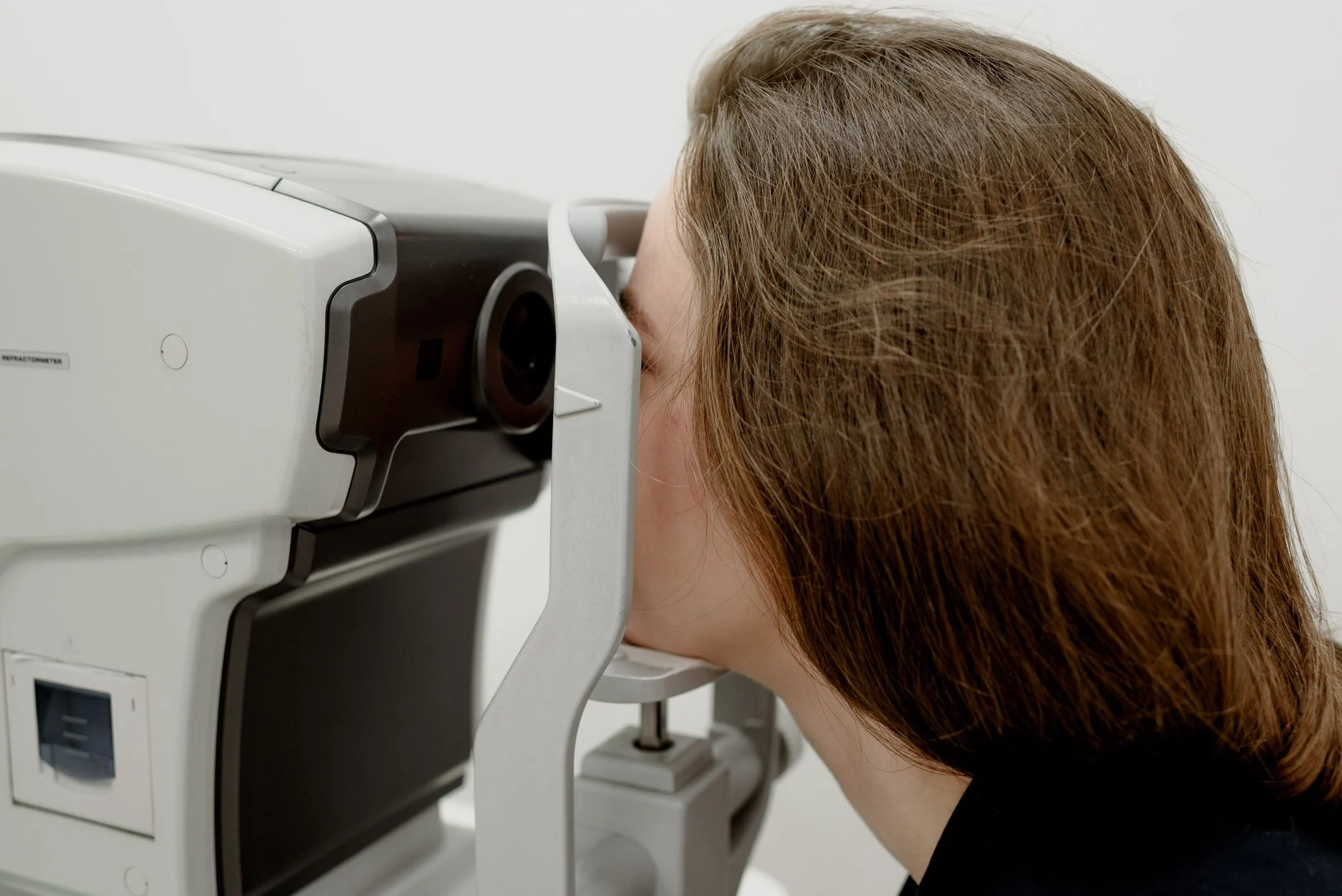
Light sensitivity has many possible causes, so an eye exam is essential. Your ophthalmologist will:
- Ask about the patterns you notice and when they started
- Check your best-corrected visual acuity (how well you see with the best glasses prescription)
- Test for glare disability using a bright light and a distance chart
- Perform a slit-lamp examination to visualize the lens and detect the type and location of any cataract
- Check the health of the retina and optic nerve
Other conditions that can cause light sensitivity, such as dry eye, uveitis, corneal problems, migraines, and some medications, are ruled out during this exam.

What Can Help Right Now
Sunglasses and Hats
- Polarized sunglasses (not just tinted) reduce glare from reflective surfaces such as water and pavement
- Wraparound frames block side light
- Brimmed hats or visors add another layer of shade
- Transition (photochromic) lenses in your regular glasses can help for mixed indoor-outdoor days
Indoor Lighting
- Use warm-tone bulbs rather than cool white
- Add multiple soft light sources rather than one bright overhead
- Position lights so they do not shine directly into your line of sight
- Adjust your monitor brightness lower and enable night-shift or blue-light reduction modes
Driving
- Consider anti-reflective coatings on prescription glasses
- Keep your windshield clean; smudges scatter light dramatically at night
- If night driving is difficult, plan errands during daylight or arrange rides
Screen Time
- Lower screen brightness
- Use dark mode where available
- Take short breaks (20-20-20 rule: every 20 minutes look 20 feet away for 20 seconds)
When Sensitivity to Light Means It’s Time for Cataract Surgery
Cataract surgery is considered when the visual symptoms of cataracts interfere with your daily life, and when a doctor confirms that removing the cataract will meaningfully improve vision. Light sensitivity is one of the top three drivers of the decision, along with blurry vision and difficulty seeing at night.
Signs that it may be time to schedule a discussion with an ophthalmologist:
- You are avoiding driving at night because of glare
- Bright sunlight makes you close your eyes or turn away, even with quality sunglasses
- Indoor activities you enjoy (reading, watching TV, hobbies) are becoming harder because of glare or halos
- Your best-corrected vision on the eye chart no longer captures how limited you feel in real life
- Symptoms have progressively worsened over months
Cataract surgery replaces the cloudy lens with a clear artificial intraocular lens (IOL). Because the artificial lens does not scatter light the way a cloudy natural lens does, most patients experience dramatic relief from light sensitivity and glare.
What to Expect From Surgery
Cataract surgery in the US is an outpatient procedure, usually done under local anesthesia with sedation, lasting 15 to 30 minutes per eye. Recovery is fast; most patients notice clearer vision within a few days. Light sensitivity typically improves within the first week and continues to improve as the eye fully heals. If both eyes have cataracts, they are usually operated on two to four weeks apart.
Discuss lens choices (monofocal, toric, multifocal, EDOF) with your surgeon. Some lens types are better than others at reducing residual glare and halos.
Frequently Asked Questions
Can I have cataracts if I don’t have blurry vision, just light sensitivity?
Yes. Posterior subcapsular cataracts in particular can cause significant light sensitivity while blurred distance vision develops later. An eye exam is the way to confirm.
Will cataract surgery completely fix my light sensitivity?
Most patients experience significant improvement. Some residual glare and halos, particularly at night, can occur even after surgery, depending on lens choice and individual anatomy. Discuss expectations with your surgeon.
Can wearing sunglasses all the time make cataracts worse?
No. In fact, protecting your eyes from ultraviolet light with quality sunglasses may slow age-related cataract progression. Wear sunglasses generously.
Related Reading on Know Your Surgery
- Cataracts: Overview, Types, and Symptoms
- Cataracts: Causes, Risk Factors, and Diagnosis
- Cataracts: Treatment, Prevention, and Management
- Cataract Surgery: Overview, Types, and What to Expect
- How Much Does Cataract Surgery Cost in the United States?
Sources
- American Academy of Ophthalmology (AAO): Cataract patient guides and photophobia resources
- National Eye Institute (NEI): Cataract patient education
- American Optometric Association: Glare and light sensitivity resources
- Mayo Clinic and Cleveland Clinic: Cataract patient guides
Medical Disclaimer: This article is for informational purposes only and does not constitute medical advice or a substitute for evaluation by a qualified ophthalmologist. Light sensitivity can have many causes; only an eye exam can confirm whether cataracts are the source.