Medically reviewed by the Know Your Surgery Editorial Team. Last reviewed: May 2026.
Understanding Treatment Options
There are different medications and therapies used in treating heart disease and preventing future complications. Let’s delve into each in a little more detail:
Medication

Drugs are also part of the treatment process; they ease the patient from further complications and exposure of the heart. Here are some commonly prescribed drugs and their roles:
1. Antiplatelet Agents
It might have Aspirin or clopidogrel, which thins the blood in the arteries. These medications prevent the occurrence of heart attack or stroke by minimizing the possibilities of blood clot formation.
2. Statins
Lipid-lowering agents consist of agents that decrease cholesterol in the body. Therefore, statins may shorten the cycle of plaque in the arteries and thus lessen additional obstruction.
3. Beta-Blockers
Beta-blockers are the medicines used to decrease the blood pressure and relieve the stress on the heart. Furthermore, they strive to reduce the frequency of heart activity, the number of angina attacks and progressive heart failure.
4. ACE Inhibitors/ARBs
These medications help in the dilation of the veins and constriction of the arteries; this reduces the pressure in the body hence exerting pressure on the heart. ACE inhibitors/ARBs have a positive impact on heart failure and increase the output of the heart since the blood pressure inside the heart chamber is decreased.
5. Nitroglycerin
The medications aid in the relaxation of the veins and the contraction of the arteries; this lowers the blood pressure in the body, thus strains the heart. ACE inhibitors/ARBs have positive action on heart failure and improve the cardiac output due to reduced blood tension in the heart.
6. Diuretics
Therapeutic agents are the other type of homeostatic drugs that make the body remove salt and fluid by producing more urine. Furthermore, some of the medications that fall under the category of diuretics have the effect of counteracting the formation of fluids in the body, thereby reducing pressure inside the vessels.
Therapy
Therapeutic interventions complement medication by addressing emotional and psychological aspects of heart health:
1. Cardiac Rehabilitation
Cardiac rehab programs provide supervised exercise, education, and support to help patients recover from heart surgery and improve cardiovascular fitness. Such programs also work towards developing healthy behaviors towards the heart in an effort to enhance the functioning of the heart.
2. Psychological Counseling
Psychotherapy can aid patients in dealing with emotional problems associated with heart disease and surgery. Psychological counseling can be used for stress and mental health since it gives people hope and coping strategies.
3. Dietary Counseling
Dietitians can assist patients in identifying hearts–healthy nutrition preferences and design an appropriate heart-healthy meal plan for each patient. Another type of direct care related to preventing disease is nutritional counseling designed to control cholesterol, blood pressure, and weight through food.
Lifestyle Changes
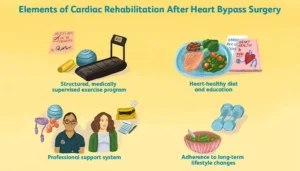
Change in habits of a person is necessary to achieve optimal cardiac health. Here’s a closer look at each aspect:
1. Healthy Diet
Healthy foods usually comprise foods from all the major nutrient groups, such as fruits and other vegetables, along with grain food products, which supply the body with heart-friendly nutrients that are essential to the body. Additionally, these foods can increase good cholesterol and reduce bad cholesterol, thereby helping to reduce blood pressure and improve heart health. This is achieved through necessary and vital nutrients and other antioxidants.
2. Regular Exercise
The studies mentioned above clearly show that physical activity is very useful in preventing heart disease. Swimming, along with walking and riding, helps the heart pump more blood, hence decreasing heart disease.
3. Smoking Cessation
Abstaining from smoking can also be considered one of the most helpful self-management behaviors before and after cardiac events. Smoking causes blockage in the vessels of the human blood, elevates blood pressure, and predisposes the body to heart diseases. Consequently, stopping smoking can significantly help prevent or mitigate these risks and contribute to preventing cardiovascular disease.
4. Stress Management
Stress management is crucial for heart rate stabilization. Moreover, long-term stress can result in high blood pressure and heart disease, causing general discomfort. Another good way to reduce stress is to engage in hobbies, relax or pay attention to the mind.
5. Maintaining a Healthy Weight
It is essential to understand that the prevention and treatment of heart-related complications due to obesity is possible by following a diet and undertaking physical activity. Obesity can result in hypertension and cardiac disease among other related complications of the heart. Furthermore, managing weight through healthy lifestyle choices can significantly reduce these risks. This impact may include but not limited to reducing the risks of contracting any of these with a healthy weight and better cardiovascular health.
Authoritative sources: ACC: Revascularization Guidelines; AHA: CABG Surgery; STS: Society of Thoracic Surgeons; Mayo Clinic: Coronary Bypass Surgery.
Prevention Measures and Interventions For CABG
Preventing heart disease and the need for CABG involves proactive measures to reduce risk factors:

1. Regular Health Check-ups
An annual medical check-up, especially to assess blood pressure, cholesterol, and blood sugar levels, is a must. Such check-ups help in the early detection of losses and can, hence, be acted upon to prevent further loss.
2. Medication Adherence
It is therefore important to understand the relevance of taking all prescribed drugs in line with the instructions provided by the doctor or health care professional. Taking medicines and limiting alcohol consumption prevents several risk factors including high blood pressure, high cholesterol levels as well as progression of heart diseases.
3. Blood Pressure Management
Following the doctor’s directions and checking the blood pressure regularly also lowers hypertension and heart disease risks. Other risk factors include behavioral factors, such as nutritional interventions and exercise, which should also be targeted in BP control.
4. Cholesterol Control
Managing cholesterol levels while on medication, on a diet, and exercising is essential to prevent plaque in the arteries from forming and possibly reduce heart disease. This may demand consuming statins, avoiding high-fat foods, and regular physical activity.
5. Blood Sugar Control
Maintaining low blood sugar plays a significant factor in protecting people with diabetes from getting heart disease and its complications. Consequently, taking the necessary steps through medication, diet, exercise, and regular blood checks is crucial. Therefore, taking the necessary steps through medication, diet, exercise, and regular blood checks is crucial. Strict blood sugar control reduces the complications resulting from blood vessel costs and the chances of heart diseases.
Authoritative sources: CDC: Heart Disease Facts; AHA: CABG Surgery; Cleveland Clinic: CABG.
Daily Management and Lifestyle Adjustments

Managing heart disease requires an ongoing commitment to heart-healthy habits:
1. Monitor Symptoms
This alerts people with heart conditions to maintain awareness of any signs and symptoms of heart disease, including chest pains, tiredness, loss of breath, and swollen feet. Furthermore, some of these symptoms need to be watched closely, and if they occur or worsen, they should be reported to a doctor for further attention. This can avert some complications and address some of the problems early before they get worse.
2. Take Medications as Prescribed
Heart disease patients must strictly follow the doctor’s guidance on taking the drugs as prescribed. The instructions should include how to report side effects and/or concerns to the healthcare provider and when to contact the healthcare provider about changing the treatment course.
3. Attend Follow-up Appointments
Recommendations to the participants include routine follow-up appointments with a doctor to help determine the extent to which the participants’ hearts have responded to interventions, as well as to make any adjustments to the care plan. Additionally, these appointments help ensure ongoing management and optimization of heart health.
4. Engage in Cardiac Rehabilitation
Adopting a cardiac rehabilitation program implies improved health status after heart surgery. Moreover, it leads to higher cardiovascular fitness status and adherence to heart-healthy practices. Furthermore, they assist individuals recovering from heart disease or surgery to become educated, physically active, and receive support.
5. Stay Informed
It is crucial to educate yourself about the disease and the ways to avoid it as well as on the ways to treat it in case you or your loved ones are faced with the manifestation of cardiovascular disease or any other heart issues. Epidemiological surveys have been carried out to educate and engage the population so that the population has all the information necessary to make better choices in terms of embracing healthy living practices for the prevention of heart diseases.
6. Seek Support
The most important needs in this regard involve family, friends, and other healthcare providers who can help the patient manage the conditions of having heart disease and the need to stay on heart-healthy lifestyles. Help from family and other health practitioners will serve as an uplifting and motivating force for patients to have healthier hearts. Additionally, their support can significantly contribute to the recovery and maintenance of heart health.
The management of the disease, including the need for CABG, should also consider medication, therapy, lifestyle change, and prevention. Patients can play an active role in their care by engaging in lifestyle changes to promote cardiovascular health. Additionally, they can effectively manage complications that arise to prevent or alleviate most heart-related health issues.These drugs are the most effective interventions that lower the risks of heart disease and eliminate the necessity for CABG.
Authoritative sources: Mayo Clinic: Coronary Bypass Surgery; Cleveland Clinic: CABG; NIH MedlinePlus: Coronary Artery Disease.
References
- NHLBI: Coronary Heart Disease. https://www.nhlbi.nih.gov/health/coronary-heart-disease
- AHA: Coronary Artery Disease. https://www.heart.org/en/health-topics/consumer-healthcare/what-is-cardiovascular-disease/coronary-artery-disease
- AHA: CABG Surgery. https://www.heart.org/en/health-topics/heart-attack/treatment-of-a-heart-attack/coronary-artery-bypass-graft-surgery-cabg
- Mayo Clinic: Coronary Artery Disease. https://www.mayoclinic.org/diseases-conditions/coronary-artery-disease/symptoms-causes/syc-20350613
- Mayo Clinic: Coronary Bypass Surgery. https://www.mayoclinic.org/tests-procedures/coronary-bypass-surgery/about/pac-20384589
- Cleveland Clinic: CAD. https://my.clevelandclinic.org/health/diseases/16898-coronary-artery-disease
- Cleveland Clinic: CABG. https://my.clevelandclinic.org/health/treatments/16897-coronary-artery-bypass-surgery
- NIH MedlinePlus: Coronary Artery Disease. https://medlineplus.gov/coronaryarterydisease.html
- Medscape: CABG. https://emedicine.medscape.com/article/1893992-overview
- STS: Society of Thoracic Surgeons. https://www.sts.org/
- ACC: Revascularization Guidelines. https://www.acc.org/latest-in-cardiology/ten-points-to-remember/2022/01/04/19/03/2021-revascularization-guideline
- CDC: Heart Disease Facts. https://www.cdc.gov/heart-disease/data-research/