Medically reviewed for current US clinical guidance · Last reviewed: October 3, 2026
Heart failure means the heart cannot pump blood as well as the body needs, not that the heart has stopped. The most common early signs are shortness of breath (especially with activity or when lying down), unusual tiredness, and swelling in the legs, ankles, feet, or belly. Other clues include rapid weight gain from fluid, a persistent cough, and needing to prop up on pillows to sleep. Heart failure is a long-term condition that is managed, and recognizing it early leads to better care.
This is the first article in our heart failure series. It covers what heart failure is, its types, and its early signs. For what causes it and how it is diagnosed, see our causes and diagnosis article. For treatment and daily management, see our treatment guide, and for outlook and common questions, see our FAQs and outlook article.
What Is Heart Failure?
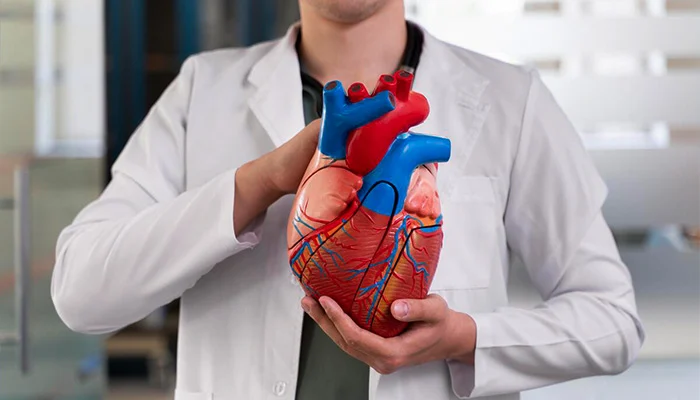
Heart failure, sometimes called congestive heart failure, is a chronic condition in which the heart muscle cannot pump enough blood to meet the body’s needs. The heart keeps working, but less efficiently. As a result, blood can back up and fluid can build up in the lungs, legs, and other tissues, which explains many of the symptoms. Heart failure is common in the United States and becomes more likely with age, but it can often be managed for years with treatment and lifestyle steps.
Types of Heart Failure
Doctors describe heart failure in a few ways, and a person can have more than one type.
By Pumping Function (Ejection Fraction)
- Heart failure with reduced ejection fraction (HFrEF): The heart muscle is weakened and squeezes with less force, so the ejection fraction (the percentage of blood pumped out with each beat) is lower than normal.
- Heart failure with preserved ejection fraction (HFpEF): The heart squeezes normally but is stiff and does not fill well between beats, so the ejection fraction looks normal even though the heart is not keeping up.
By Side of the Heart
- Left-sided heart failure: The most common form; fluid tends to back up into the lungs, causing shortness of breath.
- Right-sided heart failure: Fluid tends to back up into the legs, ankles, and belly, causing swelling.
When fluid builds up in the body, the condition is often called congestive heart failure.
Early Signs and Symptoms
Heart failure symptoms can come on gradually or suddenly. Common ones include:
- Shortness of breath during activity, at rest, or when lying flat
- Waking at night feeling short of breath, or needing extra pillows to breathe comfortably
- Fatigue and weakness that make everyday tasks harder
- Swelling (edema) in the legs, ankles, feet, or abdomen
- Rapid weight gain from fluid, such as several pounds in a few days
- A persistent cough or wheezing, sometimes with white or pink mucus
- Increased need to urinate at night
- A fast or irregular heartbeat, or a feeling of the heart racing
- Reduced ability to exercise
- Loss of appetite, nausea, or trouble concentrating
Who Is at Risk
Heart failure often develops after another condition has damaged or strained the heart. Common contributors include coronary artery disease and prior heart attack, high blood pressure, diabetes, heart valve disease, arrhythmias, and cardiomyopathy. Lifestyle factors such as smoking, obesity, and heavy alcohol use also raise the risk. Our causes and diagnosis article covers these in detail.
When to See a Doctor
See a doctor if you notice new or worsening shortness of breath, swelling, unusual fatigue, or rapid weight gain. If you already have heart failure, tell your care team about a weight gain of about 2 to 3 pounds in a day or 5 pounds in a week, or worsening symptoms, since these can signal fluid buildup.
Call 911 or seek emergency care for severe shortness of breath, chest pain, fainting, coughing up pink foamy mucus, or a fast heartbeat with lightheadedness.
Frequently Asked Questions
Does heart failure mean my heart has stopped?
No. Heart failure means the heart is not pumping as well as the body needs. The heart keeps beating, and the condition is managed with treatment and lifestyle steps.
What is ejection fraction?
Ejection fraction is the percentage of blood the heart pumps out with each beat. It helps classify heart failure as reduced (HFrEF) or preserved (HFpEF) ejection fraction. It is measured with an echocardiogram.
What is the difference between heart failure and congestive heart failure?
They describe the same condition. Congestive heart failure is the term often used when fluid builds up (congestion) in the lungs or body.
Can heart failure be managed?
Yes. Many people live for years with heart failure by taking medications, following a care plan, and managing symptoms and fluid. Care is tailored to the type and stage.
What is the first sign of heart failure?
Often it is shortness of breath with activity or unusual fatigue, sometimes with swelling in the legs. Symptoms vary from person to person.
Related Reading on Know Your Surgery
- The 4 Stages of Heart Failure (A to D)
- What Causes Heart Failure? Diagnosis and Ejection Fraction
- Heart Failure Treatment and Daily Management
- Biventricular Pacemaker (CRT) for Heart Failure
- Heart Transplant: Overview and What to Expect
Sources
- American Heart Association (AHA). Warning signs of heart failure. https://www.heart.org/en/health-topics/heart-failure/warning-signs-of-heart-failure
- National Heart, Lung, and Blood Institute (NHLBI), NIH. Heart failure. https://www.nhlbi.nih.gov/health/heart-failure
- Centers for Disease Control and Prevention (CDC). Heart failure. https://www.cdc.gov/heart-disease/about/heart-failure.html
- NIH MedlinePlus. Heart failure. https://medlineplus.gov/heartfailure.html
- NIH MedlinePlus. Heart failure, home monitoring (daily weight guidance). https://medlineplus.gov/ency/patientinstructions/000113.htm
Medical Disclaimer
This article is for general education and reflects US clinical guidance. Symptoms and types vary, and diagnosis requires a clinician. Seek emergency care for severe shortness of breath, chest pain, or fainting. This article is not medical advice.