

Understanding Arrhythmias
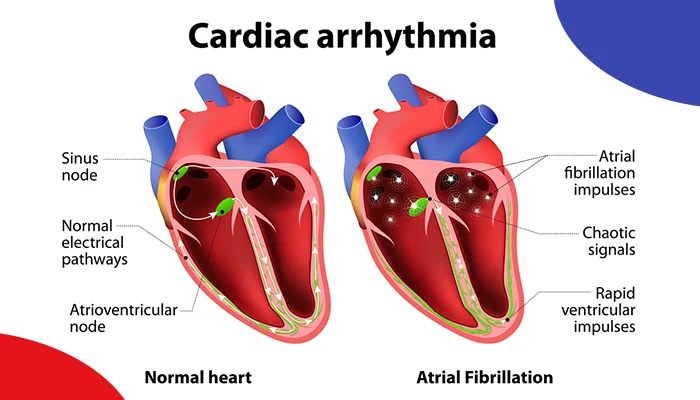
Now to understand Arrhythmias we need to know that it is an irregular heart rhythm. This rhythm can cause a person to have irregular heartbeats which can be too fast or too slow. Although some arrhythmias are not dangerous, taking it lightly and not treating it can be deadly. Indications of the symptoms are dizziness, chest pain and shortness of breath
Available Treatment Options
Medication
Medication is usually the first step in the treatment of arrhythmia. They control your heart’s rhythm and can successfully deal with the symptoms.
Beta-blockers.
These medications provide great help by slowing down your heart rate and reducing how hard it has to pump. This prevents irregular heart beats.
Calcium Channel Blockers.
This will help in relaxing your blood vessels and slowing down your heart rate. Now this happens when these medications block calcium from entering your heart cells. Now this can be very useful for atrial fibrillation
Anti-arrhythmic Drugs.
These medications are for the after care. They restore the normal heart beat and also prevent the arrhythmias from returning. They do this by changing some electrical activities in your heart.
Cardioversion
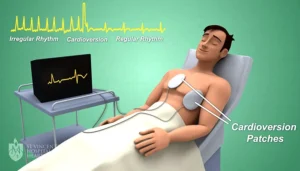
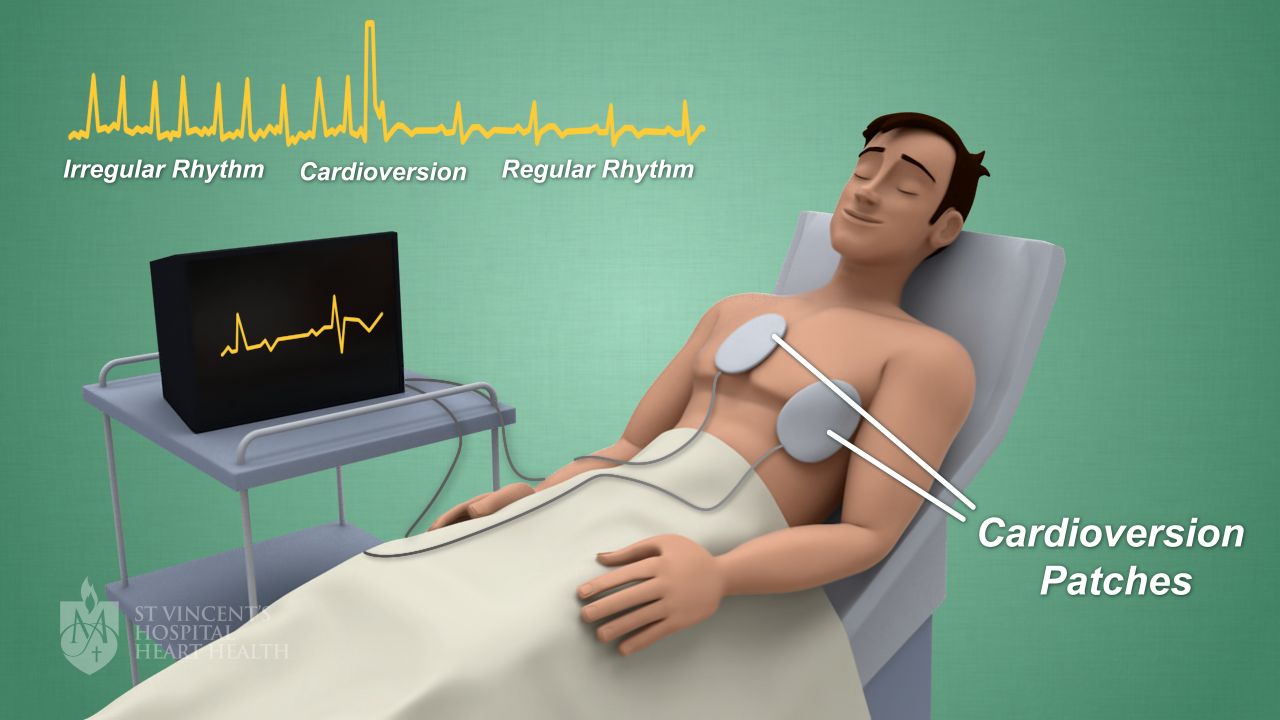
What is cardioversion? It is an effective technique to restore normal heart rhythm. This is how it works
- You will be shocked with a controlled electric shock which will go to your heart transmitted through pads or a unique device on your chest.
- This shock is a great tool for stopping the abnormal electrical activity in your heart, thus allowing it to resume its normal rhythm.
- You will most likely be given medication in advance to prevent blood clots, and a sedative might be given to make you more comfortable during the procedure.
Implantable Devices
In case of patients whose arrhythmias is worsening or is either deadly in this condition doctor may recommend the
The use of implantable devices that monitor the heart and sends electrical pulses when necessary
Pacemakers
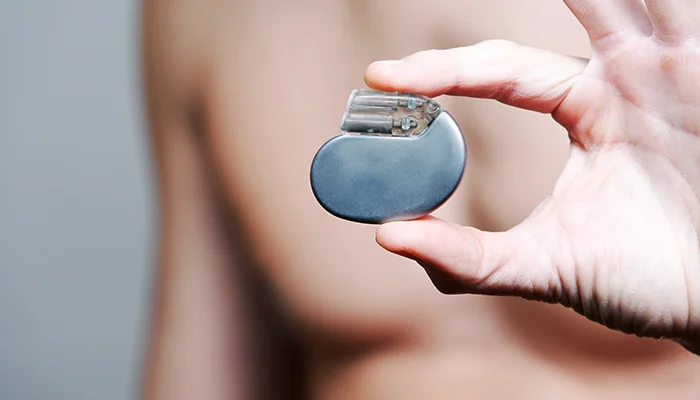
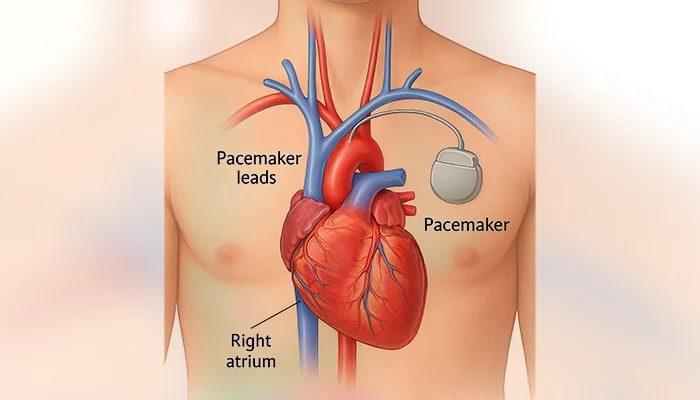
They are small devices that are placed under your skin usually near the collarbone. These devices are connected with tiny wires which connect the device to your heart. A pacemaker keeps an eye on your heartbeat. If it notices an irregular beat, it sends electrical impulses through the wires to your heart to fix it.
Implantable Cardioverter-Defibrillators (ICDs)
They are also inserted below the skin like peacemakers. They can be a kick to your heart if they detect ventricular fibrillation or ventricular tachycardia. The shock, when it is given, can be a miracle by bringing back the heart into its normal rhythm.
The implantable devices are the ones which closely watch the functioning of the heart and can respond urgently to any emergence of a problem which can prevent the occurrence of the complications due to arrhythmias.
Cardiac Ablation
Cardiac ablation is one of the commonly used methods to fix arrhythmias. The surgeon makes small holes into your heart with either heat or cold. These scars prevent the wrong signals which causes irregular heart beat.
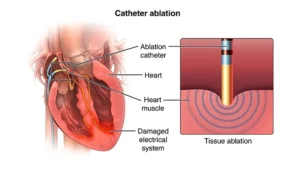
How Cardiac Ablation Works
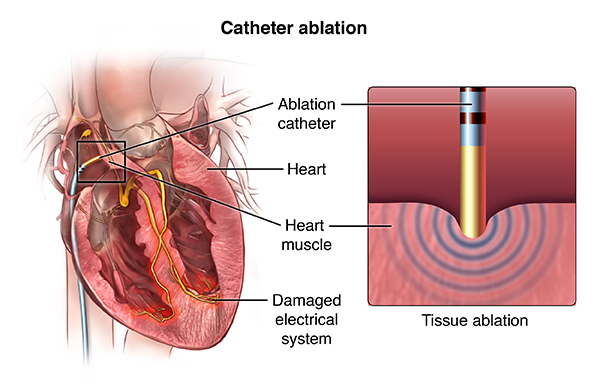
Now hows does cardiac ablation get the job done? Well a tiny tube known as a catheter gets placed into a blood vessel from either your arm or groin. Then it is guided all the way up to your heart. Once it is in place it uses either heat (radio frequency ablation) or cold (cryoablation) energy. Now what this energy does is it works on those trouble making tissues of the heart by giving them a good trim. That’s how you get rhythm back.
Preparation for Cardiac Ablation
Getting ready for cardiac ablation involves a thorough prep routine. Patients usually go through a lot of tests to assess your heart’s heath and electrical function. For example ECGs, echocardiograms and cardiac MRI scan. These tests are done for the preparation for cardiac ablation.And that’s not all – there’s often a medication and fasting period leading up to the procedure.
The Cardiac Ablation Procedure
Anesthesia
We all know the basics of anesthesia which is to sedate any patient before medical procedures so they don’t feel any pain. So, for cardiac ablation patients are given anesthesia as the first step.
Catheter Insertion
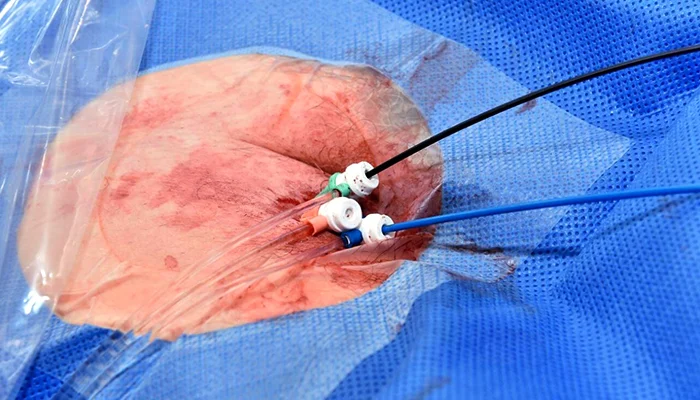
The next step is injecting the catheter. The electrophysiologist puts it into a blood vessel and leads it all the way to the heart using X ray guidance
Mapping and Ablation
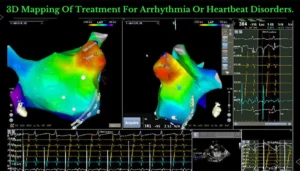
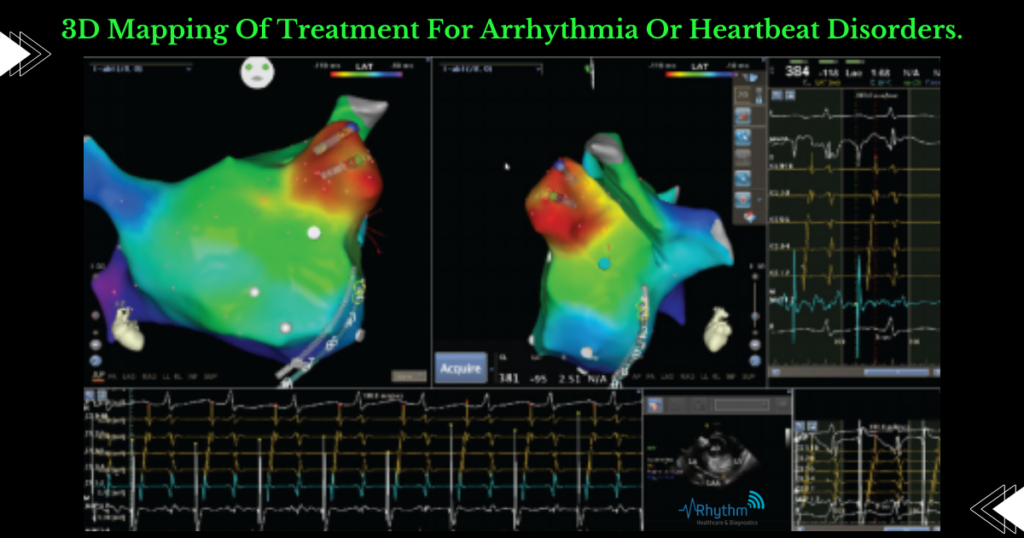
Once the catheter is in your heart the doctor will then use some tools to figure out the problem. They will look for the spot in your heart where the signals are acting up and causing irregular heartbeat. Once they find those spots the doctor will then use the tubes to either heat or cool those areas. This will either heat or freeze the tissue which is causing the problem.
Monitoring
Monitoring is very important. The doctors keep a close check on the patient’s heart rhythm and signs are thoroughly monitored during and after the procedure to ensure the safety of the patient.
Completion and Recovery
Once the ablation is completed then the catheters are removed and pressure is applied to the insertion area where the catheter was inserted from. This prevents bleeding and it is a crucial step as that could lead to bleeding. But that’s not all! Patients are usually monitored for some time after the procedure before they are discharged for home.
Recovery and Aftercare
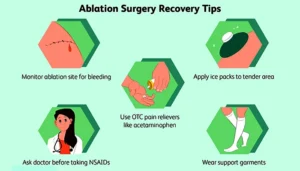
Recovery from cardiac ablation is generally very quick and the patients can go back to their normal activities within a few days. But after care is very important for the recovery to be quicker.
1. Rest and Activity
Rest is very important after the whole procedure but that doesn’t mean the patient stays in bed all day. Everyday activity is also very important for blood circulation which will heal. But intense activity should be avoided for some weeks, the rest period will depend on your condition and doctor’s recommendations.
2. Medications
Medication will be given by your doctor to control your heartbeat and prevent the blood from becoming cloth. It is extremely important to take these medications exactly as prescribed. As changing the amount or timing can put effects on the recovery.
Potential Risks
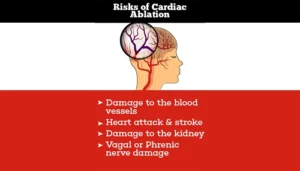
Every medical procedure has its own risk. No medical procedure will give you 100% guarantee. So, cardiac ablation can also have its risks and complications. Look out for these signs which will show if there is any complication.
Bleeding and Bruising
Patients are usually given blood thinner to avoid any clotting so bleeding and bruising around the entry area can happen very easily. If you see any of these signs inform your doctor
Damage to Blood Vessels
The catheter may injure the blood vessels, resulting in bleeding or other other consequences.
Infection
The catheter insertion site or the heart tissue can be infected.
Arrhythmia Recurrence
Cardiac ablation may not entirely cure some arrhythmias, and there is still a risk that the ablation could fail.
Changes to Make In Your Lifestyle
Making changes in your lifestyle will make sure that you prevent any such illness in future.
1. Maintain a Healthy Weight
If you are not fit, this could be the reason for most of your health issues. Being overweight or obese puts extra stress on your heart. Being at a healthy weight reduces this stress, helping to keep your heart functioning properly.
2. Balanced Diet
Food is the number 1 thing that will make you healthy. A good diet consists of low sodium and saturated fats and is more rich in fruits, vegetables, whole grains, and lean proteins.
3. Exercise Regularly
You should exercise upto 30 to 45 minutes 5 days a week. These exercises can include cycling, walking, swimming or dancing. You can literally do any form of physical activity you like. It’s just about moving your body.
4. Quit Smoking
The worst thing you can do for your heart is smoking! If you continue it after the procedure there are chances you will develop arrhythmias again. Seek professional help to quit smoking if it is difficult for you.





:max_bytes(150000):strip_icc()/recovery-from-ablation-surgery-5088339.FINAL-3802cb874a8b41448c930603088d830c.jpg)
