Breast cancer is one of the most common cancers affecting US women and a significant cause of cancer-related death, though survival rates have improved substantially over recent decades thanks to earlier detection and better treatment. This article explains what breast cancer is, the main types, the symptoms that warrant evaluation, and what the journey from initial concern through treatment typically looks like in the United States. While breast cancer is far more common in women, men can also develop it; both are covered here.
For causes, risk factors, and diagnosis, see our causes and diagnosis article. For treatment, prevention, and management, see our treatment article. For US-specific statistics, costs, and answers to common questions, see our FAQ article. When surgical treatment is needed, our mastectomy cluster covers the procedure in detail.
Significance and Prevalence of Breast Cancer in the United States
Breast cancer is the most common cancer in US women (other than non-melanoma skin cancers) and the second-leading cause of cancer death in women after lung cancer. According to the American Cancer Society (ACS) and National Cancer Institute (NCI):
- Approximately 1 in 8 US women will develop invasive breast cancer in their lifetime.
- An estimated 300,000+ new cases of invasive breast cancer and over 50,000 cases of ductal carcinoma in situ (DCIS) are diagnosed annually in US women.
- Around 2,800 new cases of breast cancer are diagnosed in US men each year.
- The 5-year relative survival for localized breast cancer is approximately 99 percent in US women.
- Mortality has steadily declined since 1989, due to earlier detection through screening and improved therapies.
Survival has improved dramatically — with early detection and modern treatment, most US breast cancer patients live long, full lives after diagnosis.
What Is Breast Cancer?
Breast cancer is a malignant tumor that develops from cells in the breast — most commonly from the cells lining the milk ducts (ductal carcinoma) or the lobules that produce milk (lobular carcinoma). Cancer cells grow uncontrollably and can spread (metastasize) to other parts of the body if not treated.
Not all breast lumps or breast changes are cancer. The vast majority of breast lumps in US women are benign (non-cancerous), including cysts, fibroadenomas, and other non-cancerous conditions. But any new lump or change in the breast warrants evaluation.
Breast cancer is broadly classified into:
- Non-invasive (in situ): Cancer cells are confined to the duct or lobule where they started — the earliest, most curable form
- Invasive (infiltrating): Cancer cells have spread beyond the duct or lobule into surrounding breast tissue
- Locally advanced: Cancer involves the chest wall, skin, or many lymph nodes
- Metastatic (stage IV): Cancer has spread to distant organs
The pathology report further classifies breast cancer by hormone receptor status (estrogen, progesterone) and HER2 status, which guide treatment.
How the Breast Is Organized
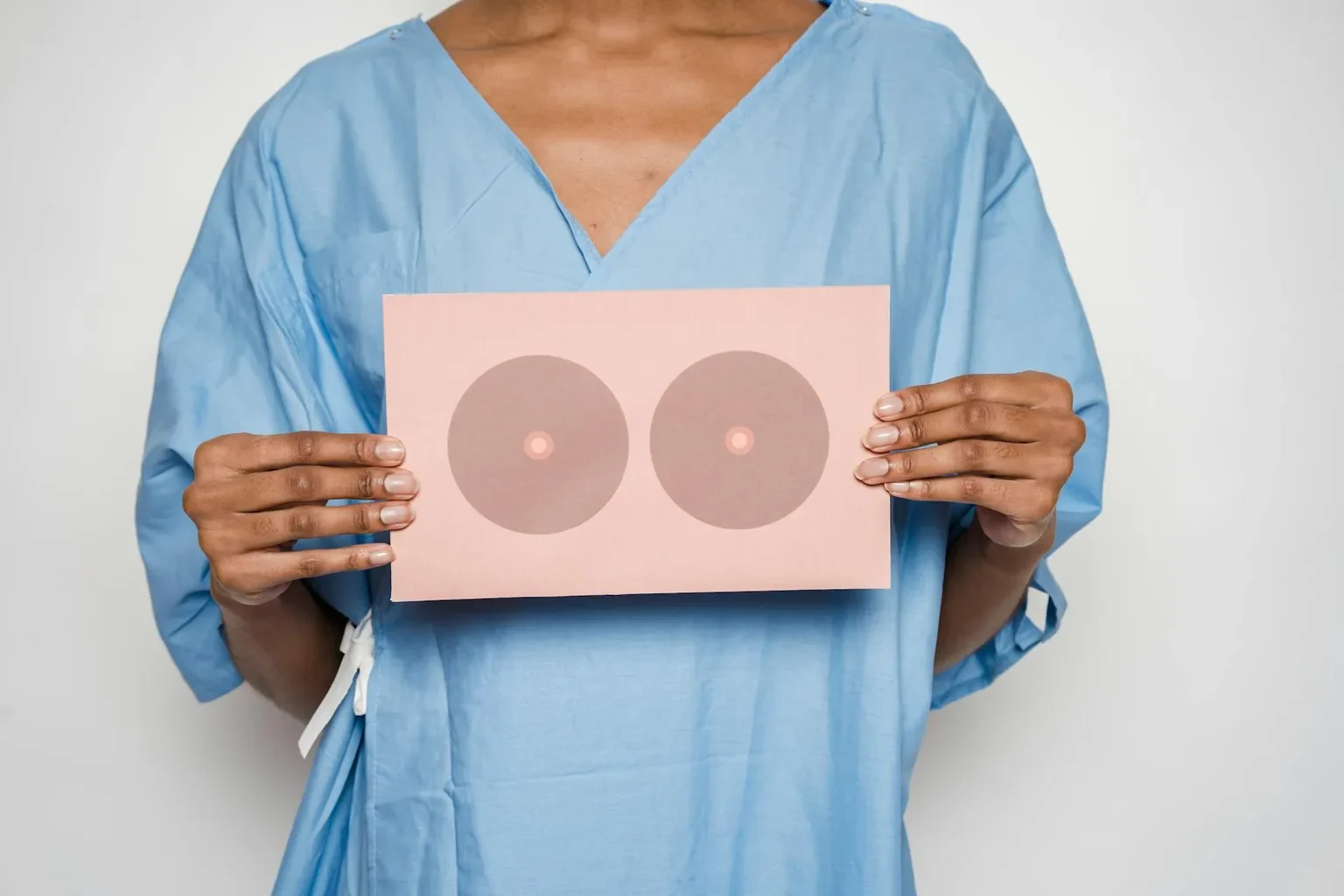
The breast contains glandular tissue (lobules that produce milk and ducts that carry it to the nipple), fatty tissue, connective tissue, blood vessels, and lymphatic vessels that drain into nearby lymph nodes (mostly in the armpit/axilla). Breast cancer most commonly arises in the glandular tissue.
Lymph node involvement matters because cancer can spread through lymphatic vessels first to nearby armpit nodes before traveling further. Assessment of lymph nodes is a routine part of breast cancer staging.
Main Types of Breast Cancer
Several types of breast cancer occur in US patients. The most common include:
Ductal carcinoma in situ (DCIS). Non-invasive cancer confined to the milk ducts. Often detected on screening mammography. Highly curable.
Lobular carcinoma in situ (LCIS). A non-invasive change in the milk-producing lobules. Considered a marker of elevated breast cancer risk rather than cancer that will inevitably spread; managed with surveillance or risk-reducing strategies.
Invasive ductal carcinoma (IDC). The most common type of invasive breast cancer (approximately 70-80 percent of invasive cases). Begins in a milk duct and invades surrounding tissue.
Invasive lobular carcinoma (ILC). The second-most common invasive type (approximately 10-15 percent of cases). Begins in the lobules. Can be harder to detect on imaging.
HER2-positive breast cancer. Cancer with elevated HER2 protein (about 15-20 percent of breast cancers). Treated with targeted HER2-directed therapies.
Triple-negative breast cancer. Cancer that is estrogen receptor-negative, progesterone receptor-negative, and HER2-negative (approximately 10-15 percent of cases). Tends to be more aggressive but is treatable with chemotherapy and increasingly with newer targeted agents.
Hormone receptor-positive (ER+ and/or PR+) breast cancer. The majority of breast cancers. Often treated with hormone therapy in addition to other modalities.
Inflammatory breast cancer. A rare but aggressive type (about 1-3 percent of US cases). Presents with skin redness, swelling, and a “peau d’orange” appearance rather than a discrete lump.
Paget’s disease of the nipple. A rare form involving the nipple skin.
Male breast cancer. Uncommon but real (about 1 percent of all breast cancers). Often presents with a lump under the nipple.
Breast cancer during pregnancy (gestational). Uncommon but possible; requires specialized care to balance maternal treatment and fetal safety.
Common Symptoms of Breast Cancer

Many early breast cancers cause no symptoms and are found by screening mammography. When symptoms occur, common patterns include:
- A new lump or thickening in the breast or armpit
- Change in breast size or shape
- Skin dimpling, puckering, or “orange peel” texture
- Nipple changes — inversion, retraction, or new persistent pulled-in appearance
- Nipple discharge — especially bloody or one-sided spontaneous discharge
- Redness or scaliness of nipple or breast skin
- Breast pain in a specific spot (less common as the only symptom)
- Persistent swelling of part or all of one breast
- Lump or swelling in the armpit (lymph node)
Important: most breast lumps and most breast changes are NOT cancer. But any new change warrants evaluation, especially if it persists more than a few weeks.
Symptoms that warrant prompt evaluation:
- New lump or thickening
- Nipple discharge (especially bloody)
- Persistent skin changes (redness, dimpling, scaliness)
- Persistent breast pain in one spot
Who Tends to Develop Breast Cancer?
Many factors contribute to breast cancer risk. The strongest are:
- Sex (overwhelmingly female; about 1 percent male)
- Age (risk rises significantly after age 50)
- Family history of breast or ovarian cancer
- Genetic mutations (BRCA1, BRCA2, and others)
- Personal history of breast cancer or atypical breast tissue
- Dense breast tissue
- Hormone exposure (early menstruation, late menopause, hormone therapy)
- Pregnancy and breastfeeding history (childbearing after 30 raises risk slightly; breastfeeding modestly reduces it)
- Lifestyle factors: alcohol use, obesity (especially post-menopause), inactivity
- Prior chest radiation (e.g., for childhood lymphoma)
The detailed risk factors and screening process are covered in our causes and diagnosis article.
Early Warning Signs Worth Evaluating
Any of these warrant prompt evaluation by your primary care doctor or breast specialist:
- A new lump or thickening in the breast or armpit
- A change in breast size, shape, or skin texture
- Nipple inversion that’s new
- Nipple discharge (especially bloody, clear, or one-sided)
- Persistent redness, scaliness, or “orange peel” skin
- Persistent pain in a specific area
- A friend or healthcare provider noticing changes you didn’t
If symptoms last more than 2-4 weeks or progress, don’t wait — see a doctor.
Your Breast Cancer Journey at a Glance
The typical US breast cancer journey begins with either symptoms or a routine screening mammogram showing an abnormality. The next step is diagnostic imaging (diagnostic mammogram, breast ultrasound, sometimes MRI) and biopsy to determine if it is cancer.
If cancer is confirmed, pathology determines the type, grade, and biomarker status (ER, PR, HER2). Staging tests assess spread. A multidisciplinary breast cancer team (medical oncology, surgical oncology, radiation oncology, pathology, sometimes plastic surgery) develops an individualized treatment plan.
Treatment may include some combination of:
- Surgery (lumpectomy or mastectomy) — see our mastectomy cluster
- Radiation therapy
- Chemotherapy
- Hormone therapy (for ER+ cancers)
- HER2-targeted therapy
- Immunotherapy (for some cancers)
- Reconstruction surgery (if mastectomy)
- Surveillance and survivorship care
Most US patients with localized disease have excellent survival. Modern treatment is highly individualized and continues to improve.
Frequently Asked Questions
Is breast cancer hereditary?
Most breast cancer cases are not strongly hereditary — about 5-10 percent are linked to known inherited genetic mutations (BRCA1, BRCA2, others). Family history of breast or ovarian cancer raises risk and warrants genetic counseling.
Can men get breast cancer?
Yes. About 1 percent of all US breast cancers occur in men. Most are detected as a hard lump beneath the nipple. Treatment is similar to women’s breast cancer.
Is breast cancer always lethal?
No. Modern outcomes are excellent for early-stage disease — 5-year survival is approximately 99 percent for localized breast cancer. Even for advanced disease, modern treatment can extend life significantly.
Continue Reading the Breast Cancer Cluster
- Breast Cancer: Causes, Risk Factors, and Diagnosis
- Breast Cancer: Treatment, Prevention, and Management
- Breast Cancer: FAQs, Statistics, and Patient Stories
- Mastectomy: Overview, Types, and What to Expect
Sources
- American Cancer Society (ACS). Breast cancer overview. https://www.cancer.org/cancer/types/breast-cancer.html
- National Cancer Institute (NCI). Breast cancer. https://www.cancer.gov/types/breast
- Centers for Disease Control and Prevention (CDC). Basic information about breast cancer. https://www.cdc.gov/cancer/breast/basic_info/index.htm
- Susan G. Komen Foundation. Breast cancer resources. https://www.komen.org/
- U.S. Preventive Services Task Force (USPSTF). Breast cancer screening. https://www.uspreventiveservicestaskforce.org/
- Mayo Clinic. Breast cancer. https://www.mayoclinic.org/diseases-conditions/breast-cancer/symptoms-causes/syc-20352470
- Cleveland Clinic. Breast cancer. https://my.clevelandclinic.org/health/diseases/3986-breast-cancer
- NIH MedlinePlus. Breast cancer. https://medlineplus.gov/breastcancer.html
Medical Disclaimer
The information in this article is for general education and is not a substitute for professional medical advice, diagnosis, or treatment. Always consult a qualified medical professional with questions about breast cancer symptoms, screening, or treatment. Any new breast lump, persistent change, or nipple discharge warrants prompt evaluation.