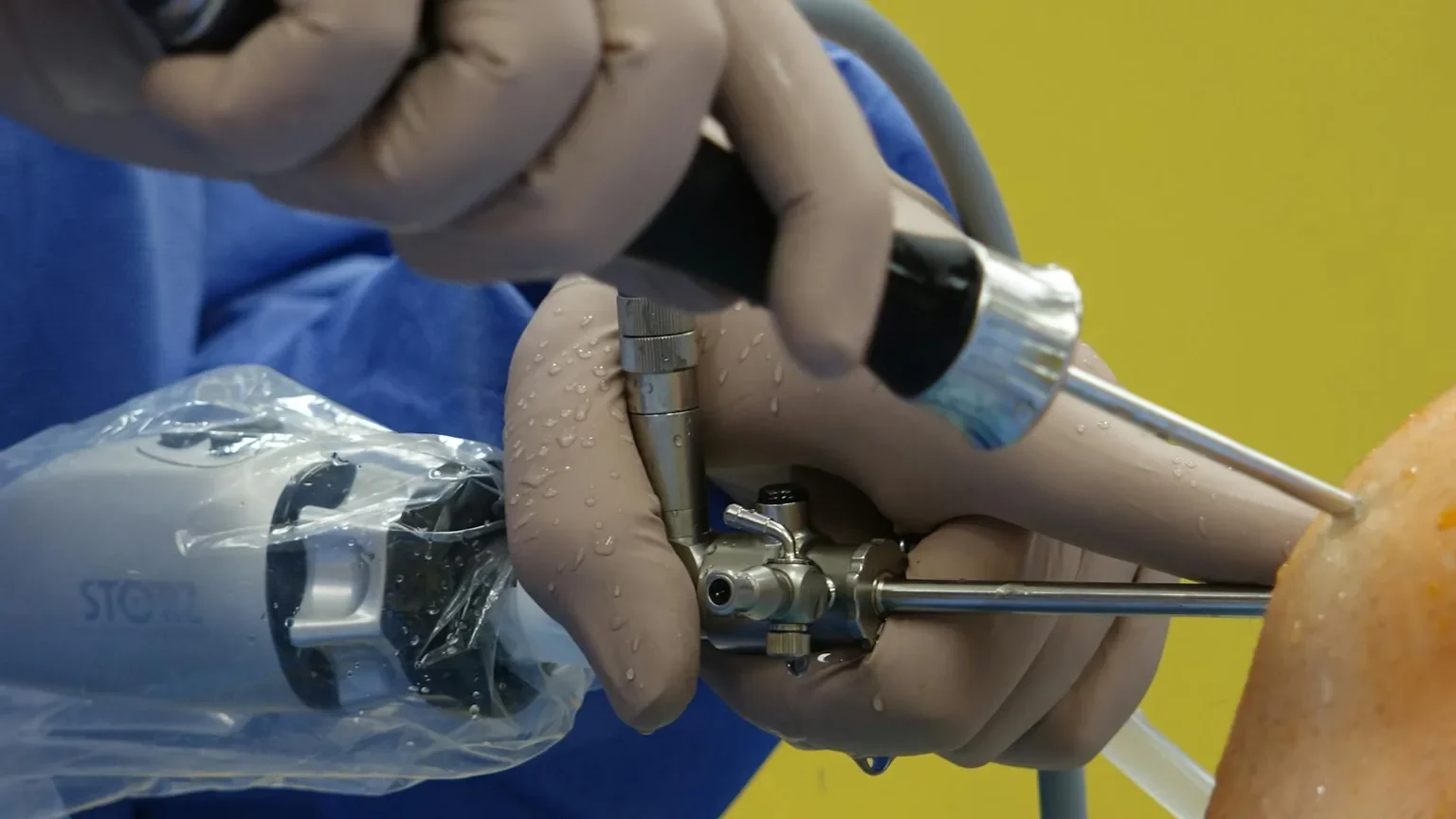
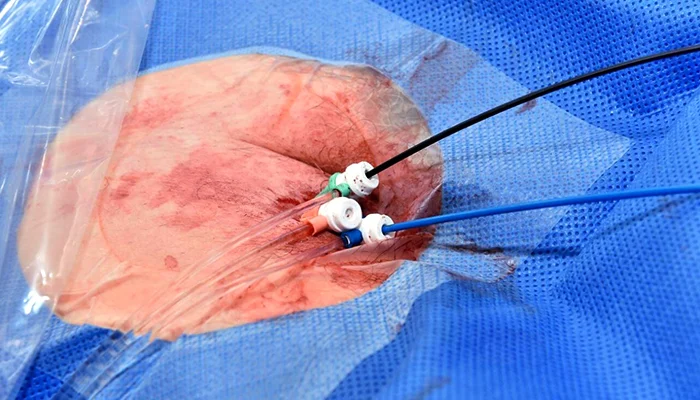
Total knee replacement is one of the most successful elective surgeries in the United States, but it’s also one of the biggest decisions a patient can make. A well-prepared consultation gives you the information you need to make a confident choice, set realistic expectations, and partner with your surgical team. This guide organizes the most useful questions to ask your orthopedic surgeon, broken down by topic — from candidacy and surgery day to recovery, costs, and the long term.
This is a practical companion to our broader TKR overview, candidate evaluation article, procedure and recovery walkthrough, and FAQ and outcomes article.
How to Use This List
Bring a printed or written list of questions to your consultation. Take notes (or bring someone who can). If you don’t understand an answer, ask for clarification. You don’t need to ask every question; pick the ones most relevant to your situation. Most surgeons appreciate a prepared patient because it leads to a better-informed decision.
Questions About Whether You Are a Candidate
These help you understand if total knee replacement is right for you right now.
- Am I a good candidate for total knee replacement based on my exam and imaging?
- Have non-surgical options (physical therapy, injections, weight loss, bracing) been fully explored?
- Would partial (unicompartmental) knee replacement be a better fit for my anatomy?
- Is there any reason to wait, or is now the right time?
- How will my other medical conditions (heart, diabetes, weight) affect candidacy and risk?
- Should I see any other specialists before scheduling surgery?
- Will losing weight before surgery improve my outcome and reduce risk?
- Am I at a higher-than-average risk for any specific complication?
Questions About the Surgical Plan
These help you understand what the surgeon plans to do and why.
- What surgical approach do you plan to use?
- What implant brand and type do you recommend for my case, and why?
- Will you use cemented or uncemented fixation?
- Will you use traditional, computer-assisted, or robotic-assisted technique?
- How many of these procedures have you performed in the past year?
- What is your reoperation or revision rate?
- What is your team’s overall complication rate?
- What anesthesia will be used (general vs spinal vs regional block)?
Questions About Surgery Day

These help you understand the day of the procedure.
- What time will I need to arrive at the hospital or surgery center?
- When should I stop eating and drinking?
- Which of my medications should I stop, and when?
- Will I be admitted to the hospital, or is this outpatient?
- How long will the surgery take?
- Will my family be updated during the procedure?
- What pain management will I receive immediately after?
- What can I expect to feel when I wake up?
Questions About Hospital Stay
These help you plan for the immediate post-operative period.
- How long do you expect my hospital stay to be?
- Will I have any drains, catheters, or IV lines after surgery?
- When will I start physical therapy?
- When will I be able to walk?
- What pain medications will I take?
- What signs of complications should I watch for during my stay?
- When will I be discharged, and to where (home or rehabilitation facility)?
Questions About Recovery at Home
These help you prepare for the first weeks at home.
- What activity restrictions should I follow in the first week?
- When can I shower?
- When can I drive?
- When can I return to office work or remote work?
- When can I return to physical/manual work?
- What exercises should I do daily and how often?
- What home preparation should I do (grab bars, raised toilet, walker)?
- Will I need a caregiver, and for how long?
- What signs of complications should I call about immediately?
- What’s the schedule for physical therapy at home or outpatient?
Questions About Physical Therapy

These help you understand the rehabilitation phase.
- How many weeks of physical therapy should I expect?
- Will I have in-home PT first, then outpatient?
- How often per week?
- What specific milestones should I expect at week 1, 2, 4, 6, 12?
- What if I’m not progressing as expected?
- When will I be off a walker, cane, or other assistive device?
- What range of motion is realistic for my case?
- What activities can I expect to fully resume, and when?
Questions About Cost and Insurance
These help you plan financially.
- What is the total expected cost (surgeon, hospital, anesthesia, implants, PT)?
- What will my out-of-pocket cost be with my insurance?
- Will pre-authorization be required?
- Will my durable medical equipment (walker, cane) be covered?
- How is physical therapy billed and covered?
- Will I need to use my deductible, copay, or coinsurance?
- Are there bundled payment programs at this facility?
- What financing options are available if I can’t cover my share at once?
Questions About Risks and Complications
These help you understand and weigh risks.
- What are the most common complications I should know about?
- What is the infection rate for my procedure at this facility?
- What is the blood clot prevention plan?
- What is the risk of stiffness or limited range of motion?
- What is the risk of implant loosening or failure?
- What is the risk of nerve injury or numbness?
- What is the risk of needing revision surgery?
- What’s the mortality risk for my age and health status?
- Will I be on any blood thinners after surgery?
Questions About Long-Term Outlook
These help you understand life after recovery.
- How long should my implant last?
- What activities will I be able to do, and which will I need to avoid?
- Can I run, ski, play tennis, or do other sports I enjoy?
- Will I be able to kneel?
- Will my implant set off airport security?
- What lifelong precautions should I take (e.g., antibiotic prophylaxis before dental work)?
- Will I have follow-up X-rays or visits, and how often?
- What signs would indicate the implant is failing?
Questions About Caregivers and Family
These help your family or caregivers prepare.
- What support will I need at home, and for how long?
- Can a family member or friend assist me alone, or do I need professional help?
- What practical preparations should we make at home before surgery?
- Are there caregiver resources at this hospital or community level?
- What signs should caregivers watch for and report?
- What support is available if I live alone?
Questions About Lifestyle and Quality of Life
These help you connect surgery decisions to your life goals.
- Will I be able to return to walking my dog, gardening, golfing, swimming, dancing?
- How will this affect my work and earning capacity?
- How will it affect my sleep, intimate relationships, and travel?
- What can I expect about pain medication needs after the first few weeks?
- Will my non-surgical knee likely need attention later?
Questions About Choosing the Right Surgeon and Hospital
These help you make sure you’re choosing the right team.
- Is this hospital or surgery center accredited?
- What is your hospital’s joint replacement volume and quality data?
- Are you board-certified in orthopedic surgery?
- Do you have fellowship training in joint replacement?
- Can I see before/after data from patients similar to me?
- Can you connect me with a few past patients who can share their experiences?
- Are you part of a quality improvement registry (AJRR, others)?
Bonus: Questions for You to Ask Yourself
Sometimes the most important questions are internal:
- Am I emotionally and logistically ready for surgery now?
- Do I understand the realistic expectations for outcome and recovery?
- Is my home environment safe for recovery?
- Do I have a strong support system?
- Have I given non-surgical options enough time?
- What concerns do I still have, and have they been answered?
What to Bring to the Consultation
To get the most out of your visit:
- Imaging (X-rays, MRI) if not yet sent to the surgeon
- Full medication list, including supplements
- List of medical conditions and previous surgeries
- Insurance card and pre-authorization information
- Notebook or device for taking notes
- Family member or friend if helpful
- Your printed question list
How to Tell If Your Surgeon Is the Right Fit
Beyond answers to specific questions, watch for:
- Willingness to spend time and answer thoroughly
- Clear, straightforward answers without excessive medical jargon
- Honest discussion of risks alongside benefits
- Realistic, not exaggerated, claims of outcomes
- Comfort with you seeking a second opinion
- A team approach (PA, nurse, PT) that you trust
If the surgeon dismisses your questions, rushes you, or pressures you to schedule immediately, that’s worth pausing on.
Continue Reading
- Total Knee Replacement: Overview, Types, and What to Expect
- Total Knee Replacement: Causes, Diagnosis, and When to Consider Surgery
- Total Knee Replacement: Procedure, Recovery, and Rehabilitation
- Total Knee Replacement: FAQs, Statistics, and Case Studies
Sources
- American Academy of Orthopaedic Surgeons (AAOS) OrthoInfo. Total knee replacement. https://orthoinfo.aaos.org/en/treatment/total-knee-replacement/
- American Joint Replacement Registry (AJRR) Annual Report. https://www.aaos.org/registries/ajrr/
- National Institute of Arthritis and Musculoskeletal and Skin Diseases (NIAMS). Knee problems. https://www.niams.nih.gov/health-topics/knee-problems
- Mayo Clinic. Knee replacement: what to expect. https://www.mayoclinic.org/tests-procedures/knee-replacement/about/pac-20385276
- Cleveland Clinic. Total knee replacement. https://my.clevelandclinic.org/health/treatments/8512-total-knee-replacement-surgery
- NIH MedlinePlus. Knee joint replacement. https://medlineplus.gov/ency/article/002974.htm
Medical Disclaimer
The information in this article is for general education and reflects typical US patterns. Specific questions to ask vary based on individual circumstances. Always consult your orthopedic surgeon for guidance specific to your case. This article is not a substitute for individualized medical advice.