Medically reviewed by the Know Your Surgery Editorial Team. Last reviewed: May 2026.
Brain tumor removal is recommended when imaging, symptoms, and tissue findings make surgery the safest path to diagnosis or treatment. This article explains what causes brain tumors, how clinicians make the diagnosis, and how the decision to operate is made. If you are new to the topic, the cluster overview article is a useful starting place.
What Causes Brain Tumors?
The exact cause of most brain tumors is not known. Tumors develop when cells in the brain or its surrounding structures grow out of normal control. Several specific factors are associated with higher risk, but most patients have no clear identifiable cause.
Genetic syndromes. Inherited conditions such as neurofibromatosis (types 1 and 2), tuberous sclerosis, von Hippel-Lindau syndrome, and Li-Fraumeni syndrome raise the risk of certain brain tumors.
Family history. A small percentage of brain tumors run in families.
Prior radiation therapy to the head. Patients treated with radiation for childhood cancers or other conditions have a higher long-term risk of brain tumors.
Age. Risk varies by tumor type. Some tumors (medulloblastoma, ependymoma) are more common in children. Most brain tumors in adults occur after age 50.
Sex. Some tumor types are more common in men (gliomas), others in women (meningiomas).
Race and ethnicity. Some tumor types occur at slightly different rates across populations in the US.
What does NOT clearly cause most brain tumors:
- Cell phone use. Major studies have not shown a clear link.
- Head injury. No consistent strong link to most tumor types.
- Diet. No specific food has been shown to cause brain tumors.
Types of Brain Tumors
There are over 120 recognized types of brain tumors. The most relevant categories for a patient-facing overview are:
Primary brain tumors start in the brain. Common examples include:
- Meningioma, which arises from the meninges (covering of the brain). Most are benign.
- Glioma, which arises from glial cells. Includes astrocytomas, oligodendrogliomas, and glioblastoma. Range from low to high grade.
- Pituitary adenoma, which arises in the pituitary gland at the base of the brain.
- Vestibular schwannoma (acoustic neuroma), which arises on the nerve to the inner ear.
- Medulloblastoma, which is most common in children.
- Ependymoma, which arises from cells lining the ventricles.
Metastatic brain tumors spread to the brain from cancers elsewhere in the body, most often lung, breast, melanoma, kidney, or colon. Metastatic tumors are more common than primary brain tumors in adults.
Tumors are also graded (1 through 4) based on how aggressive their cells appear under the microscope. Lower grades grow slowly; higher grades grow faster and are more aggressive.
Symptoms Suggesting a Brain Tumor
Symptoms depend on tumor location, size, and growth rate. Many patients have a combination of general symptoms (from increased pressure inside the skull) and specific symptoms (from the area of brain affected).
General symptoms:
- New or worsening headaches, often worse in the morning
- Nausea or vomiting, especially with headache
- Vision changes (blurring, double vision, peripheral vision loss)
- Drowsiness or trouble waking
- Seizures in a person who has not had them before
Specific symptoms by location:
- Frontal lobe: personality, judgment, or movement changes
- Parietal lobe: sensation changes, neglect of one side of the body
- Temporal lobe: memory or language problems, certain seizures
- Occipital lobe: visual field loss
- Cerebellum: balance or coordination problems
- Brainstem: swallowing, speech, or breathing changes
- Pituitary region: hormonal changes, vision changes
Severe symptoms that require immediate emergency evaluation:
- Sudden severe headache (worst of life)
- Sudden weakness or numbness on one side
- Sudden vision loss or double vision
- First seizure
- Sudden confusion or loss of consciousness
These symptoms should prompt a 911 call or immediate ED visit. A blocked drainage system in the brain (hydrocephalus) or brain herniation is a true emergency.
How Clinicians Diagnose Brain Tumors
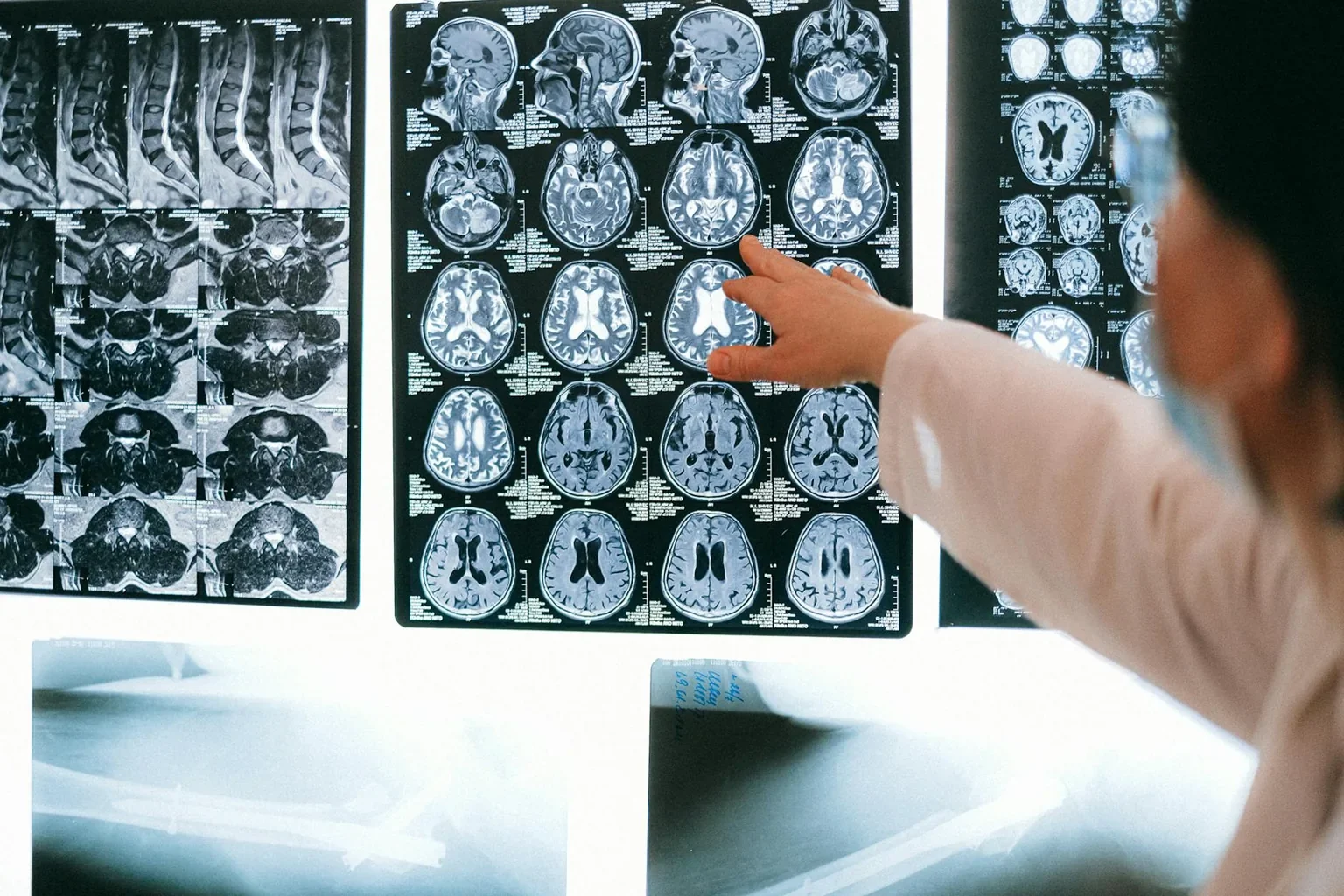
When a brain tumor is suspected, the team typically follows a structured evaluation.
Detailed history. The clinician asks about the timing and character of symptoms, family history, prior cancers or radiation, current medications, and overall health.
Neurological examination. Tests cranial nerves (vision, hearing, eye movement, swallowing), strength, sensation, coordination, balance, gait, reflexes, language, and mental status.
Imaging studies.
- MRI of the brain with and without contrast is the most important test for a suspected brain tumor. MRI shows tumor location, size, and surrounding swelling clearly.
- CT scan is faster and is often the first scan in the emergency department. CT can miss small tumors that MRI shows.
- Functional MRI (fMRI) maps language and motor regions before surgery.
- Diffusion tensor imaging (DTI) maps the brain’s white matter tracts before surgery.
- PET scan is sometimes used to assess tumor activity or look for cancer elsewhere.
Blood tests. General health labs, hormonal labs (especially if a pituitary tumor is suspected), and tumor markers when relevant.
Biopsy. A tissue sample is needed to confirm the tumor type and grade. Biopsy can be done as a separate stereotactic procedure or as part of the brain tumor removal itself. Pathology guides treatment decisions, including any role for chemotherapy or radiation.
Other tests. Depending on the situation, the team may order audiology (for tumors near the hearing nerve), visual field testing, lumbar puncture, or imaging of the rest of the body to check for cancer that has spread.
Differential Diagnosis
Several conditions can cause symptoms or imaging findings that resemble a brain tumor.
- Stroke or transient ischemic attack
- Brain abscess or other infection
- Multiple sclerosis lesions
- Brain hemorrhage
- Migraine
- Subdural hematoma
- Vascular malformations
The diagnostic workup helps the team distinguish these from a tumor and choose the right next step.
When to Consider Brain Tumor Removal
Surgery is generally considered when:
- The tumor is causing significant or progressive neurological symptoms
- The diagnosis is uncertain and tissue is needed
- The tumor is causing pressure, hydrocephalus, or risk of brain herniation
- The tumor location is reachable with acceptable risk
- Removing the tumor is expected to improve outcome with or without additional treatment
- The tumor cannot be effectively treated by other means alone (such as radiation or chemotherapy)
For some patients, brain tumor removal is not the right step. Reasons may include:
- A small, asymptomatic tumor that can be safely watched
- A tumor in a location where surgery would cause unacceptable harm
- Severe medical conditions that make general anesthesia unsafe
- A tumor type that responds better to radiation or chemotherapy
The decision is shared among the neurosurgery, neuro-oncology, and radiation oncology teams (often in a “tumor board” meeting), the patient, and the family.
How the Decision Is Made

The decision rests on several factors:
Tumor type and grade. Some tumor types (meningiomas, low-grade gliomas) are often surgically removed. Others (some lymphomas, some metastatic tumors) may respond better to non-surgical treatment.
Tumor location and accessibility. Tumors near critical regions (speech, motor, vision) may require specialized approaches such as awake craniotomy or may not be safely removable.
Patient health. Heart, lung, and kidney function affect anesthesia risk.
Patient preferences and goals. Quality of life, family support, and personal values shape the decision.
Available expertise. High-volume centers offer specialized techniques (intraoperative MRI, awake mapping, fluorescence guidance) that may improve outcomes for select cases.
For most patients, the conversation includes the goals of surgery (gross total resection vs subtotal vs biopsy), expected recovery, risks, and how surgery fits into the larger plan.
Pre-Surgical Preparation
When brain tumor removal is planned, the team typically prepares the patient:
- Pre-operative blood and imaging tests
- Steroids (often dexamethasone) to reduce brain swelling
- Anti-seizure medication, depending on tumor type and history
- Medication review, including blood thinners
- Anesthesia consultation
- Discussion of goals and risks with the family
- Sometimes additional imaging in the operating room
- Hair clipping and surgical site marking
Detailed coverage of the procedure itself lives in our procedure and recovery article.
Conditions That May Affect the Surgical Plan
Some coexisting conditions can change how brain tumor removal is performed:
- Multiple medical conditions (heart, lung, kidney, liver disease)
- Bleeding disorders or use of blood thinners
- Diabetes, which affects healing and infection risk
- Older age, which affects anesthesia risk and recovery
- Pregnancy, which affects medication and imaging choices
- Prior brain surgery or radiation
The neurosurgical team accounts for these factors when planning the surgery.
What Happens After You Decide
Once surgery is scheduled, the operating room team and the family prepare. The surgery itself, the recovery in the hospital, and the rehabilitation pathway are covered in detail in our procedure and recovery article.
The conversation with your neurosurgical team is detailed but important. Key things to confirm: surgical goals, anesthesia type, expected recovery, plan for pathology, who to call after surgery, and the rehabilitation plan if needed.
Continue Reading the Brain Tumor Removal Cluster
- Brain Tumor Removal: Overview, Types, and What to Expect
- Brain Tumor Removal: Procedure, Recovery, and Rehabilitation
- Brain Tumor Removal: FAQs, Statistics, and Patient Stories
Sources
- American Association of Neurological Surgeons (AANS). Brain tumors: patient information. https://www.aans.org/patients/conditions/brain-tumors/
- National Cancer Institute (NCI). Adult central nervous system tumors. https://www.cancer.gov/types/brain
- Central Brain Tumor Registry of the United States (CBTRUS). https://cbtrus.org/
- Mayo Clinic. Brain tumor: diagnosis. https://www.mayoclinic.org/diseases-conditions/brain-tumor/diagnosis-treatment/drc-20350088
- Cleveland Clinic. Brain tumors: causes and diagnosis. https://my.clevelandclinic.org/health/diseases/6149-brain-cancer-brain-tumor
Medical Disclaimer
The information in this article is for general education and is not a substitute for professional medical advice, diagnosis, or treatment. Always consult a qualified healthcare provider with questions about a brain tumor diagnosis or new neurological symptoms. Never disregard professional medical advice or delay in seeking it because of something you have read here. If you have sudden severe headache, sudden weakness, sudden vision changes, first seizure, confusion, or loss of consciousness, seek immediate medical care.