Medically reviewed by the Know Your Surgery Editorial Team. Last reviewed: May 2026.
An appendectomy is the surgical removal of the appendix. It is one of the most common emergency abdominal surgeries in the United States and the standard treatment for acute appendicitis. For most patients, the procedure resolves the underlying problem completely, with a quick return to normal life.
This guide gives you a calm, plain-English overview of what an appendectomy is, the main surgical approaches available today, who tends to need the procedure, and what the patient journey looks like at a high level. Detailed information on causes and diagnosis, the operating-room steps, and patient questions live in the other articles in this cluster.
Significance and Prevalence of Appendectomy in the United States
Appendectomy is one of the most frequently performed emergency abdominal surgeries in the United States. According to the American College of Surgeons (ACS) and Centers for Disease Control and Prevention (CDC) data, several hundred thousand appendectomies are performed in the US each year. The lifetime risk of appendicitis in the US population is roughly 7 percent, with the highest incidence between ages 10 and 30.
Modern surgical techniques and standardized care pathways have made appendectomy a routine, well-studied procedure with excellent outcomes. The vast majority of cases are managed surgically through small, minimally invasive incisions, with most patients going home within one to two days and returning to most activities within a few weeks.
The procedure is most often urgent rather than scheduled. When appendicitis is diagnosed, prompt surgery prevents the most serious complication of the disease: rupture of the appendix into the abdominal cavity, which can cause peritonitis (a serious abdominal infection).
What Is an Appendectomy?
An appendectomy is a procedure to remove the appendix, a small finger-shaped pouch attached to the large intestine on the lower right side of the abdomen. The appendix has no clear ongoing function in adult digestion, and removing it does not affect long-term health.
The procedure is performed under general anesthesia in a hospital operating room. There are two main surgical approaches: laparoscopic (minimally invasive) and open. The choice depends on the severity of the infection, whether the appendix has ruptured, and the surgeon’s training. The full step-by-step procedure walkthrough is covered in our procedure and recovery article.
How the Appendix and Surrounding Anatomy Work

The appendix is a small tube that branches off the cecum, the first part of the large intestine. It sits in the lower right area of the abdomen, near where the small intestine connects to the large intestine. In adults, the appendix has no clearly understood role, although it may play a minor role in immunity in childhood.
Inflammation of the appendix is called appendicitis. When the appendix becomes blocked or infected, it can swell rapidly, become painful, and risk rupturing. The body’s immune response causes pain, fever, and other symptoms that bring patients to the emergency department.
Appendectomy focuses on the appendix specifically. The surrounding intestines, the abdominal wall, and other organs are not removed.
Main Surgical Approaches

US surgeons today use two established approaches. Each has trade-offs in terms of recovery, scarring, and which patients are best suited.
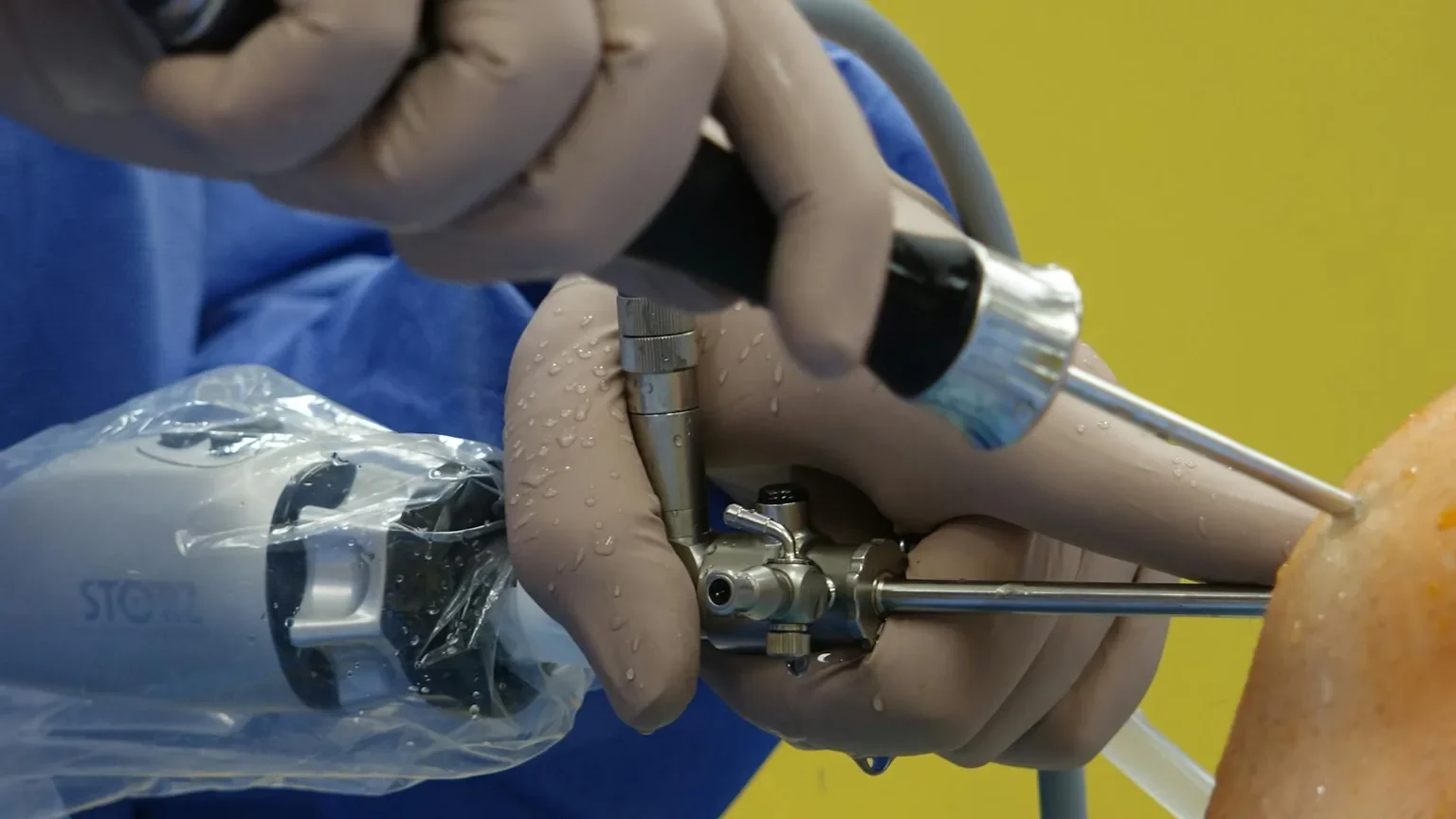
Laparoscopic appendectomy. Three small abdominal incisions are made (each about a half-inch). A thin camera (laparoscope) and surgical instruments are passed through the small openings to remove the appendix. This is the most common approach in the United States today. Recovery is typically faster, with smaller scars and less pain.
Open appendectomy. A single larger incision is made in the lower right abdomen to access and remove the appendix. This approach is used when the appendix has ruptured, when there is significant inflammation, or in some patients with prior abdominal surgeries. Recovery may be slightly longer than laparoscopic surgery.
A single sentence on emerging methods: some centers offer single-site laparoscopic surgery (one umbilical incision), although this is less common. We cover the differences in more depth in our procedure and recovery article.
Surgical Techniques at a High Level
Modern appendectomy is performed under general anesthesia. The operating time is typically 30 to 60 minutes, although patients are at the hospital longer for assessment, anesthesia, and recovery. The surgical team monitors comfort and safety throughout, and patients are moved to a recovery area immediately after surgery.
For uncomplicated cases (no rupture), many patients are discharged the same day or after one overnight stay. For ruptured or complicated cases, hospital stays may be longer to allow for IV antibiotics and monitoring.
What Gets Removed in an Appendectomy?
Only the appendix is removed. The base of the appendix (where it joins the cecum) is closed with sutures or surgical staples. The rest of the digestive tract is preserved. There are no implants, grafts, or replacements.
In some cases, the surgeon may also wash out the abdomen if the appendix has ruptured and infected fluid is present. This is part of standard care for ruptured appendicitis.
Who Might Need an Appendectomy?
Appendectomy is generally recommended when a patient has acute appendicitis, an infection and inflammation of the appendix that requires prompt treatment to prevent rupture. Common reasons in the United States include:
- Acute appendicitis — the dominant indication
- Recurrent appendicitis in some patients with mild prior episodes
- Appendiceal mass or tumor in rare cases
- Incidental appendectomy during another abdominal surgery (less common today)
Appendectomy can occur at almost any age. The most common age range is 10 to 30 years old, but children, adults, and older patients also undergo the procedure. We cover causes and diagnostic criteria in detail in our causes and diagnosis article.
Early Warning Signs That Suggest Appendicitis
Appendicitis develops over hours to days. Common warning signs that warrant urgent medical evaluation include:
- Pain that begins around the belly button and migrates to the lower right abdomen
- Worsening pain over hours
- Pain made worse by walking, coughing, or pressing on the abdomen
- Loss of appetite
- Nausea or vomiting
- Low-grade fever
- Constipation, diarrhea, or feeling unable to pass gas
- Abdominal swelling
These symptoms can have many causes, but the migrating, worsening pain in the lower right abdomen is one of the most classic patterns. Anyone with severe abdominal pain should seek immediate medical evaluation in an emergency department.
Your Appendectomy Journey at a Glance
Although every patient’s path is different, the typical appendectomy journey in the United States follows a familiar pattern.
It begins with the onset of severe abdominal pain, often prompting a trip to the emergency department. The clinical team evaluates the patient with a history, physical examination, blood tests, and imaging (most often a CT scan in adults or an ultrasound in children and pregnant patients). When appendicitis is confirmed, the surgical team is consulted and the procedure is performed urgently, usually within hours.
Pre-operative preparation is brief but thorough: anesthesia review, IV fluids, antibiotics, and any necessary blood tests. The surgery itself takes 30 to 60 minutes. After recovery from anesthesia, most patients with uncomplicated appendicitis go home the same day or the next morning. Recovery continues at home with rest, gradual return to normal diet, and follow-up with the surgeon at one to two weeks.
For ruptured or complicated cases, the hospital stay is longer and antibiotic treatment continues for several days. Detailed timelines are covered in our procedure and recovery article.
Frequently Asked Questions
Is appendectomy major surgery?
Appendectomy is a major surgery in the sense that it is performed under general anesthesia in an operating room. However, modern laparoscopic appendectomy is generally well tolerated, with most patients going home the same day or next day for uncomplicated cases.
Can appendicitis be treated without surgery?
Some recent studies have explored antibiotic-only treatment for select cases of uncomplicated appendicitis. Surgery remains the standard treatment in the United States, but in carefully chosen patients, antibiotics may be considered. The decision is made by the surgical team based on the specific case.
Will losing my appendix affect my health?
The appendix has no clearly understood role in adult digestion. Removing it does not appear to affect long-term health, weight, or digestion. Many millions of people in the US live healthy lives after appendectomy.
Continue Reading the Appendectomy Cluster
- Appendectomy: Causes, Diagnosis, and When to Consider Surgery
- Appendectomy: Procedure, Recovery, and Rehabilitation
- Appendectomy: FAQs, Statistics, and Patient Stories
Sources
- American College of Surgeons (ACS). Appendectomy patient information. https://www.facs.org/for-patients/recovering-from-surgery/general-surgery-procedures/
- Centers for Disease Control and Prevention (CDC). Inpatient surgery statistics. https://www.cdc.gov/nchs/fastats/inpatient-surgery.htm
- National Institutes of Health (NIH) MedlinePlus. Appendectomy. https://medlineplus.gov/ency/article/002921.htm
- Mayo Clinic. Appendicitis: overview and treatment. https://www.mayoclinic.org/diseases-conditions/appendicitis/symptoms-causes/syc-20369543
- Cleveland Clinic. Appendectomy: overview. https://my.clevelandclinic.org/health/treatments/4905-appendectomy
Medical Disclaimer
The information in this article is for general education and is not a substitute for professional medical advice, diagnosis, or treatment. Always consult a qualified healthcare provider with questions about your abdominal pain or symptoms. Never disregard professional medical advice or delay in seeking it because of something you have read here. If you have severe or worsening abdominal pain, fever, or vomiting, seek immediate medical evaluation in an emergency department.