Medically reviewed by the Know Your Surgery Editorial Team. Last reviewed: May 2026.
What Is a Pacemaker?
A pacemaker is a small device implanted in your chest to help regulate your heartbeat when it becomes irregular. This valuable device could be life-saving in many different situations. Specifically, it mainly consists of a generator (battery and electronic circuits) and leads (wires) inserted through the veins into the heart. The overall size is tiny so that it won’t impact the human body much.
Authoritative sources: NHLBI: Pacemakers; Mayo Clinic: Pacemakers; NIH MedlinePlus: Pacemaker.
How Many Different Kinds of Pacemakers Are There In The Market?
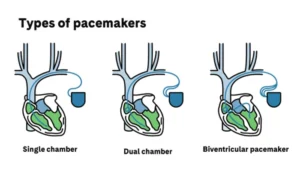
Are there any other types of pacemakers? Indeed, they are like little helpers for your heart. Here are some typical ones:
Single-Chamber Pacemakers
Single-chamber pacemakers send signals to the upper or lower chambers of the heart when necessary. They are used when the natural pacemaker fails in its function, as often occurs with a slow pulse rate. These implants maintain a constant rhythm in the overall body organ, thus enhancing its overall functionality.
Dual-Chamber Pacemakers
The only difference that makes the Dual Chamber Pacemaker unique from the ones above is that it utilizes two various leads; one is placed on the right atrium while the other is placed on the right ventricle side. When the heart beats slowly, it simultaneously imitates the sequential physiological contraction of the ventricles and atria.
Biventricular Pacemakers
A biventricular pacemaker helps all parts of the heart work together more closely than usual when someone has heart failure. Biventricular pacemakers coordinate contractions in both ventricles, enhancing heart function. Consequently, these pacemakers are recommended for patients with severe heart failure symptoms despite medication.
Leadless Pacemakers
These small devices can be put directly into the heart without wires. They are less invasive than traditional pacemakers and suitable for people whose veins are narrow or likely to experience problems. Because they are smaller, there is less risk of complications due to leads, leading to better patient results.
Authoritative sources: AHA: Pacemakers and Devices; Cleveland Clinic: Pacemaker.
What Symptoms Might Signal the Need for a Pacemaker?

Feeling Faint or Dizzy: Is Your Heart Missing Beats?
Sometimes, your surroundings start spinning, or you feel like you’re about to faint. Have you ever found yourself in this situation? These episodes of lightheadedness or fainting may indicate that the heart needs help. Consequently, in that scenario, you might need a pacemaker device to supply oxygen and blood properly.
Shortness of Breath: Is Your Heart Struggling to Keep Up?
Do you feel like gasping after climbing one flight? Shortness of breath or dyspnea may indicate ineffective heart pumping. Sometimes, your muscles get tired because it will take time between supplies since the system that makes blood move through the body doesn’t function properly or does too slowly to provide tissues with adequate amounts of oxygen.
Fatigue and Weakness: Is Your Heart Draining Your Energy?
Is your heart sapping your energy? Do you feel exhausted despite having a good night’s sleep? When your heart doesn’t work perfectly, fatigue and weakness are common. When your heart is not working properly, a disturbance in its rhythm can reduce its pumping function. This may result in you feeling depleted of energy.
Feeling of Discomfort
Do you experience pain or an unusual heaviness in your chest? It could be due to various reasons, such as heartburn, a strained muscle, or something else. However, one should take it quite seriously if it is accompanied by dizziness or breathlessness. It might be a signal that your heart has experienced a problem.
Mental Confusion: Struggling to Stay Clear
Do you sometimes feel mentally confused or off balance with clouded thoughts? This occurs when the brain receives only minimal oxygenated blood. When one’s heartbeat is not normal, it may be unable to pump enough blood to convey enough oxygen to the brain, leading to disorientation and insufficient concentration.
Authoritative sources: Mayo Clinic: Bradycardia; AHA: Bradycardia; Cleveland Clinic: Bradycardia.
What Happens During Pacemaker Implantation?

Do you want to learn about what happens during pacemaker implantation? This is usually a straightforward procedure. Here is how it typically goes:
- You will receive some type of anesthesia to prevent you from sensing anything during the operation.
- Just a tiny cut will be made near your collarbone.
- Under your skin and near to your heart, that’s where the pacemaker is usually placed.
- Leads like tiny wires are carefully inserted through blood vessels and the heart.
- The pacemaker device would then join with these cables, which help adjust and monitor the heart’s rhythm when necessary.
Authoritative sources: NHLBI: Pacemakers; Mayo Clinic: Pacemakers; FDA: Cardiac Pacemakers.
What’s the Recovery Like?
Afterward, there’ll be a need to take it easy. Your healthcare provider will explain the instructions following these general guidelines:
- To avoid complications, do not allow germs or moisture to get into the incision on your body.
- Refrain from engaging in heavy lifting and vigorous exercises over a certain period.
- Ensure you take medications prescribed by your doctor according to the instructions provided.
- Attend follow-up meetings to ensure everything is okay with your brand-new pacemaker device.
Authoritative sources: Mayo Clinic: Pacemakers; Cleveland Clinic: Pacemaker.
Understanding the Importance of a Pacemaker
A person with a severe heart issue can truly understand the importance of a pacemaker. This mainly includes irregular patterns of a heartbeat. We all know that if we have an irregular heartbeat, it could throw off our whole day. It also affects our daily life activities. These include going upstairs or getting out of bed, which seems like trying to climb mountains. However, this can change when one gets a pacemaker. It’s like having a little helper in your chest that keeps your heart ticking correctly.
Regain your passion and vitality with the help of a pacemaker. It’s like a miracle that will help you escape constant breathlessness and fatigue. It enables you to restore energy and enthusiasm for life. This tiny device is crucial for those facing heart rhythm issues, and one must not hesitate to look for it if they have similar symptoms. Individuals can actively care for their heart health by diagnosing the symptoms early and seeking proper medical attention, enhancing their overall quality of life.
Authoritative sources: AHA Journals: Permanent Pacemaker Guidelines; ACC: 2018 Bradycardia Guideline.
References
- NHLBI: Pacemakers. https://www.nhlbi.nih.gov/health/pacemakers
- Mayo Clinic: Pacemakers. https://www.mayoclinic.org/tests-procedures/pacemaker/about/pac-20384689
- Cleveland Clinic: Pacemaker. https://my.clevelandclinic.org/health/treatments/17360-permanent-pacemaker
- NIH MedlinePlus: Pacemaker. https://medlineplus.gov/pacemakersandimplantabledefibrillators.html
- AHA: Pacemakers and Devices. https://www.heart.org/en/health-topics/arrhythmia/prevention–treatment-of-arrhythmia/devices-for-arrhythmia
- AHA: Bradycardia. https://www.heart.org/en/health-topics/arrhythmia/about-arrhythmia/bradycardia–slow-heart-rate
- Mayo Clinic: Bradycardia. https://www.mayoclinic.org/diseases-conditions/bradycardia/symptoms-causes/syc-20355474
- Cleveland Clinic: Bradycardia. https://my.clevelandclinic.org/health/diseases/17841-bradycardia
- Cleveland Clinic: AV Block. https://my.clevelandclinic.org/health/diseases/17056-heart-block
- FDA: Cardiac Pacemakers. https://www.fda.gov/medical-devices/cardiovascular-devices/pacemakers-and-implantable-cardioverter-defibrillators
- Medscape: Permanent Pacemaker Insertion. https://emedicine.medscape.com/article/1839735-overview
Cost is a common concern for anyone weighing pacemaker implantation. Our US pacemaker cost guide breaks down device pricing, Medicare coverage, and typical private-insurance out-of-pocket ranges.