Medically reviewed by the Know Your Surgery Editorial Team. Last reviewed: May 2026.
What is meant by a heart transplant? A heart transplant is a procedure used to remove a malfunctioning heart from a human body. It is then replaced with a healthy heart from an organ donor. This treatment is usually reserved for individuals whose conditions are worsening. It may not respond to medications or other surgical interventions.
This guide will focus on the pertinent issues related to the factors that might cause heart failure. We’ll also explore how individuals can recognize its symptoms or how healthcare providers can diagnose it.
Causes of Heart Failure
Several factors can contribute to the development of heart failure, including:
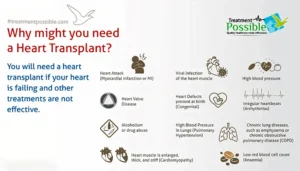
Coronary Artery Disease (CAD)
When plaque builds up on the walls of the arteries, it causes a disease known as Coronary Artery Disease (CAD). These arteries help you in supplying the blood to the heart. These plaques usually make up the cholesterol deposits. These plaques cause the inside of the arteries to shrink, which then causes serious problems later on.
Cardiomyopathy
Cardiomyopathy is a medical condition that affects the heart muscles. It is a broad category of heart muscle disease. These diseases occur when the heart muscle enlarges, stiffens, or thickens. This interferes with the heart’s basic function, which is to act as a pump in the body. Cardiomyopathy may result from genetic factors, severe emotional strain, or underlying medical conditions.
Heart Valve Disorders
Heart valve issues like narrowing or leaking can stress the heart, causing heart failure. This may necessitate a heart transplant to restore normal function. This problem may be present from birth or develop due to rheumatic fever or an infection.
Congenital Heart Defects
Congenital heart diseases are diseases that are inherited by a child at the time of birth. Another point that is related to congenital heart defects is life quality and future state of patient’s health. Most patients need to receive constant follow-up care, therapies, and management throughout their lifespan due to their chronic diseases. Due to improved healthcare and medical, children born with congenital heart disease have a chance to grow older. They can also enjoy improved health.
Hypertension (High Blood Pressure)
If this pressure is not controlled it can lead to weakening of the heart muscle and resultant heart failure. The stress may also lead to hypertrophy of the heart muscle, as the stressed heart becomes unable to pump blood adequately.
Heart Attacks
A heart attack means that part of the heart muscle is deprived of blood. This is usually a consequence of atherosclerosis blocked artery which often comes from the blood clot. This causes the deprivation of the area from the oxygen and nutrients and leads to heart muscel cells death. Repeated heart attacks or extensive damage from a single heart attack can increase the likelihood of heart failure. This may necessitate a heart transplant to mitigate complications.
Authoritative sources: NHLBI: Heart Failure; Mayo Clinic: Heart Failure; Cleveland Clinic: Heart Failure.
Diagnostic Methods for Heart Failure
Medical History and Physical Examination
Upon your next visit to the doctor, he will probably ask how you are doing and what feelings you have. Also, he will want to know whether you have any particular symptoms. This is what assist them in identifying what could be leading to your symptoms and your illness. They will inquire concerning cardiovascular ailment and attack background, surgical procedures, and medications that are currently being administered. This helps them assess your health and plan appropriate care. Next, they’ll probably question you about your lifestyle. Do you smoke, and does your family have a history of heart disease?

Then, as part of the physical exam, the doctor feels your heart and lungs while using a stethoscope. In addition, these devices monitor your heart’s rate, blood pressure, and temperature among other parameters too. They may look for evidence of fluid retention, such as the swelling of your legs or stomach. These patients may realize this as you listen to their lungs and look at their heart. It assists the diagnostician to establish if you have heart failure or something else that affects your heart.
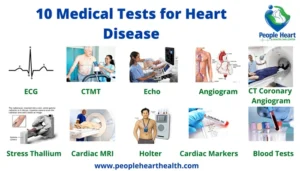
Blood Tests
Blood tests are like a health examination of your blood. They reveal what is not right in our bodies – helping the doctor treat them. Furthermore, the doctor will take a blood sample, about one teaspoon in size, from your arm and send it to the lab to conduct the test. Blood tests can check for things like:
- Complete Blood Count (CBC):
Complete Blood Count (CBC): Complete Blood Count or CBC is a type of a blood test. This test includes checking different types of blood cells. For example red blood cells, White blood cells. It includes not only blood cells but also displays platelets in your blood. Platelets help diagnose various problems you may be experiencing. This test usually shows if you are anemic. Anemia indicates that you don’t have enough red blood cells in your body to carry oxygen. - Electrolyte Panel:
This test helps you measuring the various electrolytes present in your body. For example Potassium, Sodium or Chloride. Properly managing electrolytes ensures that your heart rate remains normal. Everything seems to be in order. Imbalanced electrolytes in the body cause various problems in your heart’s rhythm and function. - Kidney Function Tests:
These procedures assess the state of functions of your kidneys. If your kidneys don’t work properly, fluid retention can occur. This can lead to body overload and stress on your heart. - Cardiac Biomarkers:
Cardiac biomarkers, also known as cardiac enzymes, are released only when your heart is damaged or under stress. A low oxygen might be the possible reason for this. The level of creatinine phosphokinase (CPK) rises after the eart attack. In the case of heart failure or other heart diseases, there will be an increased amount of specific biomarkers. These include B-type natriuretic peptide or troponin.
Blood tests can provide the doctor with vital details about your general health. They can also help determine if you might be suffering from heart failure or another heart condition.
Electrocardiogram (ECG or EKG)
An electrocardiogram is also known to be EKG. It is a type of a test which is used to record the heart electrical signals. It displays at what pace your heart is pumping blood to your body. They place the sticky patches, often called electrodes, on the upper layer of the chest. In some cases, they may also place them on the legs or arms.
The ECG device imprints a chart that shows the outcome of the heart’s electrical signals. The doctor can look at this tracing to see:
- Monitoring Heart Rate: It shows in the ECG if the irregular beat, or, other problems exist based on the frequency at which your heart beats.
- Assessing Heart Rhythm: This will assist you in knowing whether or not you have the normal rhythm of heartbeat, or the problem also known as arrhythmia.
- Analyzing Heart Conduction: The ECG may show which electric signals take place in the cardiial and may additional decide the place to.
A doctor can use an ECG to diagnose conditions such as arrhythmia, heart attack, or damaged heart muscle. Also, it is a fast way to understand your cardiac situation and the information provided can prove useful.
Echocardiogram
Echocardiogram in which sounds waves generate images of the cardiac tissues in instead of x-rays. It lacks burning and radiation, making the procedure painless. During the test, place the small transducer probe on your chest. The machinery comprises a transducer that emits sound waves which strike the heart and show the pictures on the computer screen.
An echocardiogram can show:
- Heart Size and Shape: It can tell if the heart muscle is thicker or if it should be thinner of if the chambers are of appropriate size.
- Heart Function: It can let you know how your heart is circulation and whether the valves or the walls of your heart are okay.
- Blood Flow: It can reveal how exactly blood is circulating in your heart and whether there are any signs of closing the valve or leaking.
Echocardiography can diagnose heart failure, determine its type and stage, and even identify possible treatments for the condition. Also, it is a safe and effective test that shows comprehensive information about heart structure and the way it works.
Stress Test
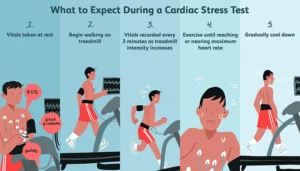
A stress test consist of the evaluation of the heart, How it performs during an intense exercise such as running or a treadmil or a stationary bike. A heart is deeply monitor during this type of activity. By doing the stress test, Doctors can monitor the following things in the patient:
- Assess Exercise Tolerance: This includes how your heart is pumping during an intense exercise. How well it performs, Your stamina and how long you can run with that fast pace.
- Detect Abnormal Heart Rhythms: Sometimes our heart shows irregular heartbeats or arrhythmias. This is considered abnormal. This test usually monitors that.
- Evaluate Blood Flow: A blockage could also occured sometimes which results in reducing the blood flow to the heart muscle. It also causes blockages in the coronary arteries.
During this stress test, evaluate symptoms such as shortness of breath and chest pain. This helps in assessing the overall heart function. The medical expert also used to measure the blood pressure of the body and also monitors whether you have a common symptoms. For e.g: fatigue and chest discomfort.
Cardiac Catheterization
Another name for cardiac catheterization is coronary angiography. Doctors consider it one of the invasive procedures used to examine all the details of your heart and blood vessels. It takes detailed pictures of the arteries supplying blood to the heart muscle, known as coronary arteries. This technique, also called angiography or arteriography, involves inserting a thin, flexible tube called a catheter into a blood vessel, typically in the groin area or arm, and threading it into the heart.
The catheter allows the doctor to:
- Check Coronary Arteries: Inject a specific dye into the coronary arteries and take X-ray photographs for analysis to detect obstruction or narrowing due to coronary artery diseases.
- Measure Heart Pressures: Use the catheter to measure the pressure inside the heart chambers. These measurements assess heart function and evaluate various conditions, such as reduced heart muscle function, heart failure, and other related cardiac problems.
- Evaluate Valve Function: Inject contrast dye into the heart chambers to visualize and assess the structure and function of the valves.
Cardiac catheterization aims to provide data about the exact morphology of your heart, the intricate vessels, the state of blood flow, and the function of the entire cardiovascular system. Despite safety concerns, doctors widely use it to diagnose heart conditions and plan treatments.
Cardiac MRI or CT Scan
Nowadays, doctors consider computed tomography (CT) and cardiac magnetic resonance imaging (MRI) scans among the main advanced imaging tests. Both of these tests provide detailed pictures of your digestive system which mainly includes your blood vessel and your heart.
Both of these tests requires a special posture in order to do that in a rightway. While undergoing a cardiac MRI examination or a CT scan, you will have to laid down your body on a flat table that will be subsequently passed into a huge machine. The machine then captures the images of your heart from different angles. A computer connected to that machine also has built-in software. It helps you in visualizing those images and gives a detailed report of each and everything.
These tests can show:
- Heart Structure: These are the ones which will enable you to see clearly the heart chambers, valves, and blood vessels and will be of great help for you to identify the structural abnormalities or congenital heart defects.
- Function: Such devices can evaluate how your heart pumps blood and identify the defects in heart function or motion of the walls.
- Tissue Characteristics: They specify whether old scar tissues from a previous attack of the heart or inflammation in the heart muscle caused by myocarditis exists on the cardiac structure.
Cardiac MRI and CT scans are the tools of choice for heart imaging purposes and they can give invaluable information about the state of your heart as well as diagnose heart conditions like heart failure, coronary artery disease, or congenital heart defects. They are non-intrusive procedures, and while they are practically safe, they may not be generally favored among all people.
Authoritative sources: AHA: Heart Failure; ACC: Heart Failure; NIH MedlinePlus: Heart Failure.
Conservative Management Before Heart Transplant
Heart transplantation is reserved for end-stage heart failure when all medical and device therapies have been optimized. Standard conservative management before transplant referral includes:
- Guideline-directed medical therapy (GDMT). ACE inhibitors or angiotensin receptor-neprilysin inhibitors (ARNI), beta-blockers, mineralocorticoid receptor antagonists (MRA), and SGLT2 inhibitors. The 2022 AHA/ACC/HFSA heart failure guideline emphasizes maximally tolerated doses before considering advanced therapies.
- Device therapy. Implantable cardioverter-defibrillators (ICDs) for primary or secondary prevention of sudden cardiac death, and cardiac resynchronization therapy (CRT) for patients with left bundle branch block or wide QRS who meet criteria.
- Mechanical circulatory support. Left ventricular assist devices (LVADs) are used as bridge-to-transplant for patients who deteriorate on the waiting list, as bridge-to-decision, or as destination therapy in patients ineligible for transplant.
- Treating reversible causes. Coronary revascularization for ischemic cardiomyopathy, valve repair or replacement for severe valvular disease, control of atrial arrhythmias, treatment of obstructive sleep apnea, and abstinence from alcohol or cardiotoxic substances.
- Cardiac rehabilitation. Structured exercise programs improve functional capacity, reduce hospitalization, and help determine candidacy for transplant via cardiopulmonary exercise testing (peak VO2).
Transplant referral is generally considered when patients have advanced heart failure (NYHA Class III-IV) on optimal therapy with peak VO2 typically below 14 mL/kg/min, frequent hospitalizations, or LVAD-dependence.
References
- NHLBI: Heart Failure. https://www.nhlbi.nih.gov/health/heart-failure
- Mayo Clinic: Heart Failure. https://www.mayoclinic.org/diseases-conditions/heart-failure/symptoms-causes/syc-20373142
- Cleveland Clinic: Heart Failure. https://my.clevelandclinic.org/health/diseases/17069-heart-failure-understanding-heart-failure
- AHA: Heart Failure. https://www.heart.org/en/health-topics/heart-failure
- ACC: Heart Failure. https://www.acc.org/clinical-topics/heart-failure-and-cardiomyopathies
- NIH MedlinePlus: Heart Failure. https://medlineplus.gov/heartfailure.html
- NHLBI: Heart Transplant. https://www.nhlbi.nih.gov/health/heart-transplant
- Medscape: Heart Transplant. https://emedicine.medscape.com/article/429816-overview
- ISHLT: International Society for Heart and Lung Transplantation. https://ishlt.org/
- SRTR: Scientific Registry of Transplant Recipients. https://www.srtr.org/